
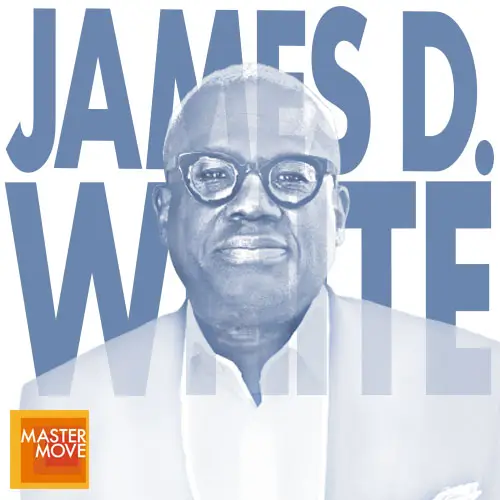
James D. White is a transformational leader with more than three decades of experience as an operating executive across consumer products, retail, and food service, including leadership roles at Gillette, Safeway, Nestlé, Purina, and Coca-Cola. He is the former Chair, President, and CEO of Jamba Juice, where he led a successful global turnaround, and today serves on more than 20 public and private boards. He is also the co-author, with his daughter Krista White, of Culture: How to Build a High-Performing, Resilient Organization with Purpose. In this conversation, we explore leadership, culture, and building organizations that last.


>> Craig Gould: James D. White, thank you so much for joining me today on the podcast. James, you’re a transformational leader with more than 30 years experience as an operating executive in the consumer products, retail and restaurant industries, including brands like Gillette, Safeway, Nestle, Purina and Coca Cola. You’re the former chair, president and CEO of Jamba Juice, where you led the successful turnaround and transformation of the company from a made to order smoothie shop to a global, healthy, active lifestyle brand. In recent years, you’ve become a coveted board member on over 20 public and private boards, including Panera, the honest company, Simply good foods, Cava affirm. In 2020, you co founded Culture Design Lab to develop and guide CEOs and executive leaders to design organizations with purpose. And you recently published the book Culture how to build a, High Performing, Resilient Organization with Purpose, which you co authored with your daughter Krista White, who’s a startup founder and creative and. And so I want to talk to you about the book. I want to talk about the playbook for addressing and transforming culture inside of a company. But I’d like to start these conversations with one common question, James, which is, what are your memories of your first job?
>> James D. White: My first job was, working at a restaurant, a burger joint in my hometown of St. Louis, my Missouri. And it was like a single location restaurant called Jacks or Better. And what I remember most is the, the silk, shirt that I had as a part of the uniform. And I recall it, at least in my memory, as red. And you wore black slacks. And I remember, in that job I was in maybe eight weeks. So the, that shirt was probably as expensive as whatever money I made during the time. But in all seriousness, just the, just what you learn kind of working in a frontline job has always kind of stuck with me, you know, from that point forward. But that shirt does stick out in.
>> Craig Gould: In my mind, I’m just shocked to hear that somebody that would be on the front line busing tables would be expected to wear a silk shirt because.
>> James D. White: It probably wasn’t so great. It might have been nylon. Okay, it was probably whatever the polyester may be, but.
>> Craig Gould: But you look good though.
>> James D. White: We, we did.
>> Craig Gould: So your career, there’s food and food service and retail all over your career. I mean, it’s funny, when I talk to people about their first jobs, there seems to be something that winds up. I don’t necessarily know if it gets in their DNA or whatever, but we can see the roots of where they spend the rest of their careers in one way. Or another in those first jobs, what do you carry with you from Jacks or better, that you think you pulled from over the years?
>> James D. White: I just think the hard work that, the men and women do that are on the front lines in any of our companies, no matter what the industries. And I’ve gravitated towards those kind of industries, whether it’s restaurants, supermarket, retail. Those places require great leadership. and I think I’ve built those kind of skills over time. So it’s a place where even in the boardroom, I end up serving on boards that have great brands, great hospitality shops, and leaders that are really focused on enabling their frontline workers to really deliver great service to their customers and clients.
>> Craig Gould: How do you walk into an organization and connect with those frontline workers? It reminds me of a conversation I had with Oscar Munoz when he took over as CEO and chair of United Airlines. He tried to go and meet basically every employee in United Airlines over the first six to eight weeks. And, you know, how. How do you get your. Your finger on the pulse of that worker? Because at the end of the day, they really know more than any spreadsheet can show you about what’s going on with the customer.
>> James D. White: I think any business that I’ve walked into over the last 20 or 30 years, I try to listen, I try to ask questions. I try to really understand what the heartbeat of that business is. I want to understand what problem we believe we’re solving for our customers, what jobs do they hire us to do if it’s a restaurant, and then how we best service the people that are most connected to solving that problem or executing that job for our customers. and I’ll give you maybe a couple examples from the book on how I’ve seen some great frontline leaders, leaders of hospitality areas that are excellent with their frontline workforce. We interviewed for the book the CEO of, Bold House, Rush. And one of the comments that struck us is he said he, you know, they’re in the produce and ag area. When he goes to a field, he actually goes to the bathroom on the field. And that tells him everything he needs to know about the culture. I think that’s kind of powerful, kind of conceptually. That same CEO said, you know, five minutes of my time as CEO is worth it for any employee because that might change the trajectory of their day or how they, you know, service a client or interact, with, with a colleague. So he always makes time. I thought that was special. And then there’s a few other leaders that we talked about in the book. And they create space and time to hear from workers at every level in the organization, whether it’s Carla Vernon, the CEO at the Honest Company, where she’s got sessions where you can ask Carla anything. Matthew Stevens, who’s the CEO of Bay Club and a 30, 40 year fitness club executive, started on one of those frontline jobs. So he’s never far away from being attuned to what that part of his workforce is thinking about, even as they’ve acquired lots of other companies. So I’ve got a great appreciation, great focus there. And maybe one final example, not necessarily in the book, but I sit on the board of Cava, the Mediterranean chain. And one of the expectations, for our board members each year is that we all work in a restaurant at least one day per year. And it connects what you’re, the conversation you’re having in the boardroom with really what’s happening in the operations. So those are some examples that I think, really kind of underscore the importance of that point.
>> Craig Gould: I’ve had some recent conversations with folks about board governance and the role of the board. And can you kind of give me your opinion on culture? We always think of kind of culture starting from the C suite, you know, from the CEO. But can you tell me about board culture versus company culture? I mean, does the culture actually start one step above in the boardroom?
>> James D. White: No, I think the culture ideally should start inside the company, led by the, by the CEO. In the most ideal sense. There’s an alignment between the culture in the company and the interaction and the culture in the boardroom. But the board can often have its own cultural kind of flavor in terms of the interactions. But ideally you would want it to be seamless, kind of throughout and not inconsistent. The role that the board plays, especially in public companies around governance is more from an oversight perspective, evaluation of engagement and kind of key measurements around turnover and regrettable loss of the senior team, and just the overall engagement of the workforce directly.
>> Craig Gould: What is the benefit of spending that day in the kitchen at Cava other than getting dish pan hands? Is it just to maintain an appreciation for the workforce, or are there sometimes realizations, about specific things that might be improved?
>> James D. White: Well, it’s really connecting the dots between when we talk about deploying some technology in the restaurant and being able to see said technology and how the staff uses it to understand the pressures as you go across, a day in the life of one of our employees in our restaurants, what rush hour looks, what that surge looks like, and Then just on a real human level, being able to talk to the fantastic employees and kind of understand their stories and what they love about, you know, working at CAVA as an example, and what their career track has been inside our company and how they think about the future. So all of those elements, you know, how the guests enjoy our food and the, you know, the, the timing of delivery and, you know, where might there be opportunities, et cetera.
>> Craig Gould: In your book, you and Krista lay out the book in kind of three parts, right? Know, do and measure, and you know, I think in that first part, you know, the, the leader has to sort of define what that North Star is, right? And sometimes if you’re, you’re lucky enough to have come into a functional company that is strong and has been well led, that, that’s already sort of obvious. But many times you, you kind of have to figure out what that North Star is. And I think even regardless if you’re inheriting it, I think many CEOs want to leave their fingerprints, whether that’s good or bad. So can you talk about if I am a CEO, if I’m stepping up to the plate, how do I define that North Star and how do I know that, I’m choosing the right thing to put my focus on in terms of the culture. Does, good culture look the same in every organization?
>> James D. White: I think good culture is going to look different in every single, organization. and maybe I would define how we think about culture first and then I’ll get to your question. In the book, we try to give just several examples of how people describe culture. Tony Wells, who’s a, board member multiple times, cmo, talks about culture being the operating system that the company runs on. As an example, Danny Meyer, the famous restaurateur, talks about being cultured. The things that we say we stand for minus what we accept is another way to think about it. There is another CEO in the book that talks about culture gets caught and not taught. So as we think about a new executive, new CEO, stepping into a new organization or part of an operation, we start with, you know, how do we understand the context? So this is kind of the knowing what matters. And we always start with, a step. And it’s a capability that we actually think is going to be a really critical capability moving forward. This ability to kind of empathize and assess and listen with heart. And as we think about the broader process of thinking about change in culture, we talk about almost an archaeological dig like process where you’re looking at what are the rituals, what are the meetings, how do people get recognized and appreciated? And just kind of documenting that, and assessing that and then casting that versus what the ambition is. And the distance between those two really determines whether you’re trying to change culture, transform culture, or just iterate and continuously improve culture. But the assessment phase and really thinking hard about what is and what are the, mechanisms that kind of guide the organization is kind of a great starting point. And then we move to a future state that says here’s the true north and establishing that. And what we talked about in the book is this future back idea. I was just on with a potential client this morning, and they’re working on their 2030ambition. What we typically encourage people to do is almost write the press release of Wall Street Journal article. What’s the story about your organization that you want to be written four or five years from now, and be as granular as you can and then come back to the day and say, well, if that’s to be true, what things do we need to start doing today in what sequencing and what priority is to get to that future ambition? And that’s the future bad process that we talk about. Kind of in between those, two things is the doing what matters. And that’s kind of how do you operationalize culture and change of a culture? What are the mechanisms? Do our values as articulated, need to be shifted, adjusted? What are the related behaviors? How do we role model those behaviors? How does the CEO and executive team create an open communication system that enables, a culture to be brought to life? And then how will we measure our progress on a quarterly, annual, daily, weekly basis, moving forward?
>> Craig Gould: I really latched on to what you were saying about empathy there. And I’ve heard you say before that, people, people don’t care how much you know, until they know how much you care. Right. That makes me think about some of the hurdles that CEOs find themselves kind of coming into these. And, you know, not that I always use sports metaphors, but I think about head coaches coming into football teams that have been a total mess. Right. I mean, the CEO can find himself coming into the same sort of thing within his organization where, okay, you’re the fourth CEO in the last eight years. It’s hard for the employees to be convinced that you’re not the same as, you know, last three guys. And, you know, how, how are you going to be different? Or, you know, do you know what you’re doing? Do you really Care about us. I mean, in, in the caring can really kind of crack something open there, right?
>> James D. White: Absolutely.
>> Craig Gould: Can you kind of talk to that?
>> James D. White: Yeah. And I think it’s the, I think it’s the example, the Bolthouse Fresh CEO, Timothy Eskimir, because he was a new CEO coming in and he just made some really unbelievable comments. He said, everybody needs to understand what a good day’s work looks like, no matter the function. If you think about that in the most simplistic terms, that’s all we want is to, you know, Craig James, just help me understand what a good day’s work looks like. If I’m frontline in a restaurant, if I’m in your finance department, if I’m in the supply chain, if you’re clear on that, that really goes a long way to enabling every single associate, to do the best work. It also enables the associate to know how we interact with each other kind of across. So I think that’s one way to think about it. I think CEOs creating very different kinds of ways to listen. Whether it’s ask Carla anything. there’s a CEO in the book that when he came into a new operation, Sam Bright, he actually put before the organization a user manual. How to work with this. You know, how to work with me as an executive. Here’s my family, here’s how I prefer to get info, here’s how to communicate. But what a brilliant idea where you’re going to make it easy for me as a new teammate to work with my leader. that’s another way that I would think about it. and then just being constantly engaged. One of the things we talk about in the book is the gap between what organizations say they stand for and what they actually do. And we’re in our work always trying to reduce the gap between the, say, do and even organizations that have measurement systems. One of the biggest critique we hear from, you know, you have us to do another survey and you didn’t take any action from the last one. So we really want folks to be, engaged on reducing the, say, do gap. And you know, really, if you ask for feedback, you should take some action with it. And even if you don’t agree with the feedback, tell me why you’re not going to take the action and what action we might take.
>> Craig Gould: So when you, when you consult CEOs C level executives on this topic, do you get pushback? Do you get, do you feel like they’re skeptical on the necessity to slow down before you speed up? Because I Mean, it seems like they want to hit the ground running and want to make changes and they need to be able to see quantifiable results as to, what they’re doing because we’re in a turnaround. Or do they understand that turning around the culture kind of has to be that first step and maybe that that’s not something that involves a lot of hacksaws and things.
>> James D. White: Well, we wrote the book because we think one of the incredible unlocks for most companies is culture. And as we looked at the velocity of change that we’re all facing, if you go back to, the global pandemic and huge supply chain disruptions and you today have tariffs, you’ve got geopolitical challenges that we’re all facing. So if I’m sitting in any leadership today, the velocity of change is much greater than it’s ever been before. And there definitely is an impact and implication on your workforce and your culture and really understanding if the espoused values still line up with the realities of today’s world. And we didn’t even mention yet, this acceleration of AI in many companies, and kind of that impact. So, we actually believe that the work around culture is a huge unlock for leaders. It’s an underdeveloped capability for most of us. and empathy is going to be the anchor around this capability. That’s not something that people learn about in business school, but it’s definitely a learnable skill as we’ve worked with our clients. and you can put process and practices that get you closer to being able to listen with heart and have an impact on the organization. By focusing on culture.
>> Craig Gould: In my conversations with CEOs and reading the book, I mean, there seems to be this real triangulation regarding culture that it needs to be intentional and it needs to be consistent. You know, you talked about the say, do gap. You know, why is inconsistency more corrosive than having no stated values at all?
>> James D. White: Well, I think the, you know, I’d start with the thesis of the book. You either have culture by design or default. Even if you’re not thinking about it, you have a culture inside of every, organization. And it’s just how things get done inside the company. It’s almost a bigger disconnect to have things on a placard that are inconsistently role modeled by the CEO and the top executives in the company because the organization is matching. They’re watching to see if what we say and what actually is modeled by the leaders is actually practice. So that Gap really creates a huge disconnect. I mean, it’s. The old adage is do as I say, not as I personally do. And people are looking for the inconsistencies. And the more closely align what we say and what we do is those, in our opinion, are the organizations that are the most effective. The other thing is, I think there is a generational, gap. We got four or five generations working in most of our companies today. And one of the ways we tried to bring that to life in the book is we, had pull out notes, you know, James’s kind of old school notepad and Krista’s notes app. And we tried to bring our different generational views, into light so that leaders would at least think about, you’ve got three or four different generations sitting in the workforce, and that’s not a good or a bad thing. All the generations have some advantages over the other generations. There’s a lot to be learned across generations, but we do need to be aware of that.
>> Craig Gould: You know, you wrote the book with Krista. It’s the second book that you guys have written together. And just as I hear the words that you’re speaking about, the corporation, it makes me think, as a parent, how my nuclear family, we have values in raising our children. We learned that if we wanted to, to actually influence our children, we needed to be consistent with rules and consequences, actions and consequences and actions and rewards. It just feels like there’s not that big of a leap from parenting your nuclear family to kind of managing the culture in an organization. Given the fact that you wrote this book as a family, what do you think about that?
>> James D. White: Yeah, I think every, every family has a culture. We have, you know, so I, I think about the meals that I had growing up. We would have, spaghetti and fried fish every Friday, and there was likely a pot roast with potatoes on Sunday. And just how you, you know, what the family values, how you come together, what the communication flow is. As I think about today, some of the rituals that we have as a kids are all adults. But we’ve got a family book club, where we’re trying to. And everybody gets to pick a book. So we’re, you know, finding ways to connect, finding ways to share stories. And Craig, we just started this, fun process over the holidays a couple years ago. We do, a family vision boarding exercise, you know, so we at least get to share what everybody’s thinking about for the year. We take a couple hours and have magazines and post things. But it’s been a really, really kind of just special exercise for us and it’s interesting. My wife and I are hosting, we were telling some friends about this and we’re hosting a follow up session with some friends, like five or six couples where we’re going to just kind of share how we’re thinking about life in the world. But those are rituals that allow you to, you know, kind of align around a future state. our vision. Boarding as a family drove our trip. Last year we were in South Africa, my wife and I, and we’re headed to Brazil with the kids. coming up in this upcoming year.
>> Craig Gould: Can you talk a little bit more about rituals? Because you know it sounds like you’re someone who I’ve heard, I’ve heard the stories about push ups but it sounds like you, you really appreciate rituals. And how would that apply to the, the C suite? I mean are there because I mean I Talked to, to CEOs that talk about you know, my job is actually just a handful of things. It’s allocation of capital, it’s hiring the right people, it’s maintaining the right cadence.
>> James D. White: And even that cadence, I’ll underscore the point of that cadence. One of the questions I ask when I come into a company and I’ve got a couple CEOs that I’m a CEO and a division president and a healthcare system. And I said, you know, I said Craig, just tell me how things work. Tell me how often you and your management team meet and tell me about the other cross functional interactions and what happens annually and what do you do with your board and are there all hands on meeting or town halls? Tell me what those look like. And literally I can paint a picture of how the company works or does not work, by just seeing how thoughtfully the executive thinks about their cadence or their operating rhythm because those all matter. there was a CEO in the book that she spends 15 minutes every meeting just to check in on let’s talk about our culture and consider. I mean so hers is literally a weekly routine where she’s checking in on culture. There is another company in the agriculture space again. They have annual ah summit and they have a tomato fight, and that’s kind of a fun part of the ritual. Bay Club, they literally come together annually in a summit of their top 300 leaders. And it’s their time to honor the past, and really think about the future and the things that they want their leadership teams to focus on, moving forward, at the Very end of the book we talk about, kind of after game reviews at the Snook Supermarket team does key initiatives. They’ll have a, have a discussion of key initiatives, but they also do live 360 reviews of each other. So if you thought about 8 or 10 people and you say, okay, well James is next, let’s give him you know, one piece of, you know, what do you like that you’ve seen from James over the last quarter? Six months, year. And then what’s one opportunity that might help James? And, and everybody gets a chance to be in the, the barrel. Those are the kinds of things that don’t cost much, that are just practices. one of my favorite, kind of simple processes that I do with most of my consulting engagements. This process of start, stop and continue. I did this when I took over CEO at Jamba. And as you’d imagine from me, I had index cards. Kind of old fashioned, but I had folks on index cards. The new CEO coming in. What do you hope I’ll do? What are you fearful that I might change, that I shouldn’t? and then what do you love about this place that we shouldn’t touch? And just so simple. What should we start doing? What should we stop doing? What should we continue? And then the bonus question is what advice do you have for the leader? And it’s just amazing, Craig, just having those simple conversations. What comes out of it? we just facilitated, a board retreat for a nonprofit this weekend and people are just stunned at the richness of what people will provide anonymously. So we’ll typically do something written that’ll come through, but then we’ll take, you know, so this board was like 15 people. We took a half dozen of the leaders on the board and then did a one on one, 45 minute discussion to kind of add to what we would be able to bring into the room. And I think they were stunned at what they got out of a day session. just with those simple questions.
>> Craig Gould: You know, in there you, you talked about middle managers and there’s a lot of space between the C suite and the front line. And I’ve heard you say before in the book that those middle managers function as the hinge point of culture. How do you make that and make sure that’s not a squeaky, squeaky, door, right? I mean that is it a matter of hiring the best people to be lieutenants? Is it a matter of investing in those middle managers to make sure that the culture permeates all the way down. Is it a matter of finding the right people on the front lines to promote up, or is it all of the above? How?
>> James D. White: It’s all of the above, but the point I’d make is that you didn’t mention is engaging those folks. So as you’re designing any change, your transformation effort, we’re huge proponents of kind of action learning teams where you pull a group of that mental manager, cadre into the building of the plan. Because again, to the point you made earlier, that’s who knows most about what we need, what our customers needs are, what the problems are, what tools we have and don’t have. So, you know, finding thoughtful ways to pull that management, that middle management into the change process kind of up front in a participatory way. Then as you roll it into the organization, you can say, hey, we built the training, the communication, the tools, the reward Systems based on 6, 7, 8, 10 of your colleagues, that, you know, sit across a wide range of geographies, if that’s the way to think about it. A wide range of different functional areas. So there’s a cross functional purview. But that engagement is really important and having the tools, the training and kind of the investment in that hinge point or really pivotal middle management group, because that’s who most of the people work for.
>> Craig Gould: You spoke about how that third piece is the measurement and how you’re really not doing yourself any favors if you say we’re going to measure this, but then you don’t respond to how you measured it, that you don’t respond to the data. Well, what metrics actually help leaders understand whether culture design is working? What should we be tracking? How do you do that effectively?
>> James D. White: I think the main thing, is whether it’s qualitative or quantitative metrics. And we’re fans of kind of doing a bit of really both of those. Even for leaders, you can measure your activities. So one of the two just simple examples, from the book. Dear, friend of mine, he was the CEO of Campbell Soup. Doug Conant just writes letters of gratitude, and he’s written 30,000 of those letters since his time as a leader. And I’ve, happened to meet some really senior executives that work for Doug. And they said, oh yeah, James, I saved that note from Doug from whatever the year and whatever the job I was in. And those kinds of things really, really matter. So that’s a metric. There’s a CEO we talked about in the book and he spends, two hour sessions each month kind of Reinforcing values and culture with his organizations, technology company. And he, and we said two times a month, 12 times a year. So you’re telling me you do 24 of these a year? So he only have a one hour session. He’ll have an example, some role model of a value that they’ve said is important inside this company. And he’ll have 15 minutes of anonymous Q and A that he’ll answer. And he said, james, as long as 200 people show up and it’s kind of a voluntary session, I’ll keep doing it. And he’s been doing it for five years. But the kind of discipline required to really keep a culture living and evolving over time, and then it’s, you know, for some people it’s kind of the things that they do annually. I’m a huge fan, have been since my time at Gillette of the Gallup Q.12 tools in their pulse, like tools. and it just, it depends on what problem you’re solving. So I think the survey, the mechanisms need to be customized to the particular, company, both qualitative and quantitative.
>> Craig Gould: You’ve written this book, against a backdrop of a world that’s full of political division, AI disruption, social unrest. How can leaders create stability without ignoring the reality of, of what’s going on in the world around us?
>> James D. White: I think leaders need to really look for the things that unite us in a really divided, sometimes politically charged world. So I think that’s the first thing. I think the leaders need to use the true north of their particular company, the values, as the ongoing kind of touchstone. We talked about empathy being a core capability. really being able to bring that to the fore, I think is important. in this particular moment, I think we need to be aware of, how to lead across generations. I think that has never been any more important than it is today. And then, the thing that I’ve kind of built my career on from a leadership perspective, sometimes you have to be willing to stand alone if you know what the right thing to do is kind of how I’ve always kind of approached my leadership work.
>> Craig Gould: Where have you found the courage to do that?
>> James D. White: Really from my humble beginnings, working class family, first member of my family to graduate from college. And I just always try to do the right thing and I always wanted to do work that would make my parents proud. And that’s kind of how I’ve always, kind of operated as a leader.
>> Craig Gould: You know, towards the end of the book, you, you talk about legacy, right? You know, so how should leaders think about culture as part of what they leave behind?
>> James D. White: Well, there’s a, there’s an epigraph we close the book with and it’s it’s attributed to an ancient kind of African proverb. And the way I think about it is really about planting seeds that’ll grow trees that’ll create shade that we might not have a chance to experience. And I think if we think about the investments we make in people and practices and processes of the companies that we lead, that can outlive us. I think those are the things I’d be encouraging your listeners to think about. What’s the one thing that I might do today that would have a longer term impact if Krista was on this call with us, where she always closes is just as leaders. Let’s pick one thing that you can personally do that’ll strengthen the culture of your own company and do that.
>> Craig Gould: One last question. let’s say I were a middle manager, maybe a VP or an svp. And I’m trying to get from where I am to, to the C suite, from where I am to where I want to go. What are the right things? What’s my playbook? And if not necessarily, what’s my playbook? Even from, from your. I’m sure you had a playbook you worked from getting there. But you know, having been somebody at the top, what were you looking for in terms of the people that you brought with you? What advice can you give the person that’s wanting to make that transition?
>> James D. White: Yeah, the advice that I’d have is be excellent at your day job. you know, deliver fantastic results. But I think more importantly, leaders that are going to grow and accelerate in careers or leaders that are teachers, leaders that create other leaders is something I’m always looking for. Like who’s building the best organizations and the best talent in their function across this company. Those are going to be the people that are going to accelerate in any company. And who are the best teammates like Cross functionally, who makes the, or you know, to still from a sports analogy, who makes our team better? I mean those are going to be the people that are going to rise through the organization. and then the only final piece of advice is be curious and stay in an active learning mode. Those folks are always going to find ways to excel inside of companies too.
>> Craig Gould: Well James, I really appreciate your time today. If folks wanted to find the book, if they wanted to engage with your consultancy, if they wanted to track you online and stay up to date on what’s going on with James D. White. Where should I point them to find you?
>> James D. White: We’d love for you to reach out to Krista or I on LinkedIn would be one place to find us. the book is available at your, whatever, your favorite bookseller is available on Amazon. You know, both of the books are available on Amazon. And, you know, reach out and let’s stay in touch. We’re passionate about, this work and we’re looking for more people to join us on this journey of building, great companies with fantastic cultures on purpose.
>> Craig Gould: Well, James, ah, again, this has been a really productive conversation and one that, I really appreciate, the work you do, where you’re putting your focus and I really appreciate you being my guest today.
>> James D. White: Thank you, Craig. Thanks for having me on.
>> Craig Gould: Awesome.