

Erik Blachford helped pioneer the online travel industry as a founding executive at Expedia, eventually serving as its CEO. Since then, he’s built a career as a board member and investor in iconic consumer tech companies, including more than 20 years on the board at Zillow. In this episode, Erik shares a wide range of insights on CEO leadership, company culture, board governance, and the future of AI. He also talks about his early jobs in adventure travel, his theater background, and how storytelling and cadence shape enduring organizations.

>> Craig Gould: Erik Blachford, thank you for joining me today on the podcast. Erik you were part of the founding team at Expedia where you led marketing before becoming president and then CEO. You have a long history of being a thought leader in the travel space. you’re an active investor and very prolific board member these days for a number of companies, notably names like Zillow and Peloton. Erik I want to dive into all sorts of insights that you can provide that a lot of people can’t. But I like to ask a common question to all my guests, which is, Erik what are your memories of your first job?
>> Erik Blachford: Of my first job? Oh, well actually that’s a funny question. So my first job was as a camp counselor at a camp north of Montreal where I grew up. Traditional, camp called Camp Nomineeing, that involves, learning how to paddle a canoe and make a fire and that sort of thing. and I don’t think you even knew this as you asked the question, but actually the funny thing is here I am 40 odd years later and I own the camp now. Wow. It came up for sale about 10 years ago. And so I’m actually headed there next, next, week to do the briefing for all the kids who are going to be counselors for this summer. So that, how’s that for a first full circle Moment.
>> Craig Gould: That’s awesome. I love asking this first question to all my guests because oddly enough, and maybe it’s not odd, those first jobs say something about where we wind up, or maybe there’s something that we take with us. It’s. It’s not a wasted opportunity. And I mean, gosh, you. You’re on the board of Hip Camp. I’ve heard you talk about your first job out of college doing bike tours in Europe, right? I mean, it’s, it’s all. And even there, I mean, you’ve had full circle moments, right? Is it a matter of following your passions or, you know, is it. What do you think that is?
>> Erik Blachford: well, it’s a good question. Of course, I can only really speak to my own experience. yeah, it’s sort of funny, right? Because, I mean, here we are on this podcast, and of course it’s because I’ve got this corporate career. but actually, when you think about that stuff, it just comes down to a real love for the outdoors. I mean, I just love being outside. I love going to camp. I love camping out. Once, I discovered that you could do this thing of, biking all over Europe. This, is right as I was coming out of college. I said, great, sign me up. I’ll be a guide. You know, I’ll take these big. I mean, imagine you’ve got three college kids taking 30 high school seniors around Europe for a month, right? I mean, it was just absolute insanity. But it was fantastic. And it gave me an opportunity to do everything from leading the bikers up some hill in the Alps, but then you’re in Italy and you’re having to figure out how to walk them through and maintain their interest in the art museums and so on. And so it was just great. And it sort of combined. I guess it was really the spark of what’s been a lifelong interest in travel, both adventure travel and sort of more conventional kind of cultural travel. and also just, you know, taking responsibility like that from an early age makes an enormous difference. I mean, I remember being a bike tour guide with the students is one thing, but then we sort of graduated to doing it with the, you know, the adult trips, which just meant taking. I mean, nowadays going on a bike trip to Europe is a classic thing. People do it all the time at all different ages. Back then, it was still a pretty, pretty new thing. This was in the 90s. and we would go, and I remember some of the lessons I got very early on had to do with the fact that the People on these trips had these huge jobs, and I remember once I had the, the chairman and the CFO of American Express, with me, John. John Lennon and Howard Clark. I still remember two of the nicest, nicest guys. and it. It sort of taught me this wonderful lesson of, like, hey, these are just people, and they’re out here riding a bike like anybody else, right? And. And they’re. They were. They were kind. They were cool. and they sort of were a really nice opportunity for me to understand that the world’s just populated with people, and just because they’ve got big job titles and stuff doesn’t make them any different from you and me. And that’s one of the things that I learned really early.
>> Craig Gould: You know, another conversation that we’ve been having lately with some of these CLO executives and the starting points of their careers is, I’ve been talking to a handful that started in pr, and it makes me think about, you know, you go to Princeton. I think you went as, like, an engineering student, but you wound up getting a theater degree.
>> Erik Blachford: You have done your research. That’s correct.
>> Craig Gould: I try. I try. it just makes me wonder. Like, it seems like there’s something about learning how to talk, learning how to be in front of people, learning how to storytell, how to connect with people verbally, that regardless of how you get that experience, pays dividends down the line.
>> Erik Blachford: Oh, I think there’s no question about that. I mean, so in my case, it was a little extreme. you know, I was drawn to the creative side of things, and I did finish up as a theater major, and I’ve actually got an MFA as well, which I went back and got in midlife in playwriting and short fiction.
>> Craig Gould: Oh, wow. You know, that. That slipped right through my research. I didn’t. I didn’t know that.
>> Erik Blachford: We can get to it later. But, yeah, I mean, I came up through the marketing track, and so I did my rotation. So one thing I should say is, you know, one of the things that was incredibly helpful for me early on is, after I finished my bike tour stuff, I went to business school, and then I landed at Microsoft. and one of the great things there was, it was big enough. I mean, it was very small compared to today’s Microsoft, but it was still big enough that you could actually have sort of the concept of rotation around different things. So I got to run PR for a while. I got to run advertising for a while. I got to run product for a little while. And really Understand how the pieces fit together. And there’s just no question that, understand if you have any interest at all in kind of the consumer side of life and marketing and so on, having the opportunity to get some media training, but also to understand how to put sort of messaging together to present your product to your customers the way that you think is going to be most attractive to them. And it sounds so dumb. It’s positioning basically. Right. But there comes a time in your career where either you’re going to read those books and, and that stuff and give it a shot or not. And I got really lucky and then I got good training on doing that really early on. And once you learn how to do that stuff, you don’t tend to lose it.
>> Craig Gould: Tell me about that time because, I mean, that’s. It would have been smack in the middle of the, growth of the Internet. You know, people were thinking about how can we use the Internet to change people’s access. You know, I’m, originally from Dallas. I knew a lot of people that worked in Sabre, right. New people, you know, American Airlines, travel agents, so on and so forth. My view of what Expedia was able to do was the ability to provide this user interface that allowed empowerment to the customer. I mean, it all. It all kind of tapped into Sabre still, correct?
>> Erik Blachford: Well, I mean, Sabre, like system called Worldspan. But eventually we did use Sabre as well. Yeah. I mean, listen, the way that we thought about it and the way that I guess I still would is, back then, even to. I mean, it’s sort of funny to think now, but even to book a plane ticket, to do anything, you sort of had to call a travel agent up, or you could call the airline. But most people would call a travel agent up and then they’d say, okay, here’s what I want to do on the phone. Then the travel agent would pull up the screen, look at all the options, and read all the options back to you. And you’d be like, oh, you just see the screen. Right? I could. I can make my own decision. I don’t. This is just crazy, inefficient. And so we sort of started off thinking that’s all we’re really trying to do here is just let the person see the screen and then the booking can continue. But we’ve made it so much more efficient, and that’s sort of where it really came from. and of course, now I guess we can use the language of empowerment. And it does feel like that. Really feel more like just like, look, this is just an obvious thing that should happen. And then as the Internet, we sort of wondering how many people are going to have Internet access. It wasn’t clear that everybody was going to. And especially high bandwidth access. So the early stages, there were no graphics or anything. But then of course you started adding all that stuff up and you just, you go with the idea of it. And we started to realize pretty quickly too that we weren’t in the business of disenfranchising all the travel agents. What we were doing is we were taking all the work that most of them hated doing anyway. Right. Just the rote over and over again, cutting the same plane tickets or, you know, they much rather be planning people’s vacations or doing stuff that actually added more value. And by the way, usually it made them a lot more commission too. But the industry was sort of structured the wrong way. So in the end things sort of leveled out in a pretty interesting structural way. but you know, it’s not like we exactly saw all that coming. You never do. Right. You make it as you go along. To some extent.
>> Craig Gould: I think it’s interesting to talk about where we were in a business climate and you know, in that particular industry back in the mid-90s and with the Internet, versus where we are in the throes of the development of AI. I mean when we started talking about travel agents and now we start talking about agentic AI travel assistance. I mean you’re almost able to kind of come full circle and almost have like your own travel agent working on your behalf.
>> Erik Blachford: Yeah. so first of all, I completely agree that it’s an analogous situation. I do think so. when it comes to travel though, and I’m not trying to be protectionist or anything here, but an awful lot of travel has already been kind of automated. You know, like, like most people, I mean I get going and booking a hotel room is, I mean if you use, you know, use the Hotel Tonight app or something, you’re doing that so easily now that how, much value really is there going to be in, in prompting an agent to go and do it for you, however. So, so that’s my kind of take on the travel thing. I mean, I realize that it’s very sexy to use travel as the example and all the companies are doing it and so on, but I, I don’t necessarily see the same obvious value add. What I do see though is something, across, boy, huge swaths of, of, of what I guess I would call kind of, you know, laptop screen oriented Work that really reminds me of all those travel agents who hated cutting all those plane tickets but had to do it because there was no other way for it to happen. Boy, does that ever sound a lot like a lot of people answering the same customer service question over and over and over again on email, or people cranking out, identical tax returns for people over and over and over again. And the difference might be, slightly pessimistic. Note that it’s not clear to me that those people will have the higher value added things to do the way that travel agents did. But, but that to me is the analogy here is, is AI will take away an awful lot of those rote tasks that are being done by people right now. in the same way that that the Internet took away in the online travel industry, took away an awful lot of those kind of just pedestrian day to day booking transactions that were happening. So, so that to me is sort of the analogy. I would be surprised. And of course predictions are dangerous that. But if we fast forward a few years, it’s much easier for me to imagine A.I. having automated a lot of the customer service in travel than having automated away a lot of the booking, in travel. That would just be my guess.
>> Craig Gould: In terms of strategy, you kind of have to think in terms of scenario planning. Where are we? Where could we be? What are options A, B and C? Are you optimistic about those scenarios when you look out on the horizon? And what do you see when you look out there?
>> Erik Blachford: well, okay, well, so first of all, I guess my name is probably not familiar to a lot of people listening to this and so I should just set the table, is to say that, my perspective on it, even though I’ve had three different CEO roles over time, what, I do primarily now is I sit on boards. And, and this is exactly the kind of question that we sit around trying to sort of puzzle through. and so, there’s boards of travel you mentioned hipcamp. I’m on the Zillow board, which is real estate. I was for a long time on the Peloton board and kind of the health and fitness world. I’m still on the Adventure Travel Trade association board, which is very much a sort of a travel oriented thing and a couple others as well. Bus Bud is a big bus marketplace. Every company I’m involved in, whether as an advisor or a board member, is spending an enormous amount of time, if they’re if they’re awake, trying to figure out what is the answer to that. Question. And I would say that in a world where I mean we’re recording this June of 2025, right, and just I think, you know, within the last week the CEOs of two of the biggest AI companies, Anthropic and OpenAI, have basically come out and said, you know what, we don’t really understand how these models work, but we’re super optimistic. But we’re also kind of scared. Those are the guys who are running the companies making the models. So for those of us who are sitting there thinking, well, ah, how do you scenario plan, what you end up doing is you’ve got to break things down task by task and try to figure out, okay, what is the AI, ah, at least as good as what we’ve got today, presumably at a lower cost. And then you start thinking about, okay, how can we make it do things that are new and that actually can help our business? And it’s radically different business to business. I mean with Hipps Camp’s case, we sort of figured out how it could really help to streamline making bookings on behalf of clients. You know, Zillow has used AI, in really interesting ways to make the sort of interface, between agents and customers and mortgage originators, much more efficient. I mean those kinds of things you see on a day to day basis, but they happen from a big winnowing of a funnel of possibilities that have to come down into, okay, what’s actually actionable today. And it’s such a strange environment because nobody can predict the end state. Even the guys running the companies don’t really understand how the models work exactly. So they can’t really predict the end state. And I would say that’s the biggest difference between now and the world of sort of the dawn of the Internet, or even, you know, the dawn of a smartphone, right, where there were smart people who pretty quickly, because of deterministic systems, were able to say, here’s how this is going to go right now. Could you have predicted, say that smartphones, would birth Instagram, which would birth all the kind of the social harms that we think are being inflicted on teenagers and so forth? I don’t know, I’m sure there were some people who did. But the systems themselves, how they worked was pretty well understood, right? What were the controls on them pretty well understood. This is a different situation where they’re not as well understood. And I think that’s why you’ve got, I mean the idea that the people running the companies are willing to say publicly that they think there is a round number percentage chance that their products will lead to the end of humanity. We, we, we take it for granted. We, you know, it’s, it’s a. But think about it, right? I mean it is a very, very strange moment in time where we’ve all become. That, that’s, that we’re nor. It’s normalized at this point that we sit there saying, well, the most powerful people in the world who control all these. Well, they’re not the most powerful people yet, but I think, you know, certainly some of the wealthiest in the world are fairly upfront about the idea. And you know, I feel when I talk to sort of friends of mine who aren’t sort of in and around the tech world, the closest analogy to that is actually not the Internet. It’s the atomic bomb. Right? Nuclear power is a great thing. The atomic bombs, you know, potentially very destructive thing. the two things coexist nervously. Sorry, sorry. Sorry if that went to a dark.
>> Craig Gould: No, I mean, well, you know, it just m. I mean this is a stream of consciousness Jack Kerouac sort of conversation. So it’s, it’s fine. But you know, I guess one of the things I think of when, when you, when you talk about that is, and I know that you’re very passionate about environmental concerns and one of my perceptions is that, you know, we, we started talking about this, you know, four or five years ago with you know, the, the crypto mining conversation about consumption of electricity. My perception is that that’s not stopping you. Add on top of that, the growth of the AI the more powerful and the more we ask of it, the more consumption of electricity is going to be necessary to run these farms. And I’ve heard some people say that, you know, we, we aren’t going to be able to add electrical resources online fast enough to keep up with the growth and that, that may actually be one of the constraining factors is access to power. You know, that same person was saying that our ability to retire coal and the dirtier forms of electricity, that’s really not going to be a possibility because there’s going to be so much demand and we can’t get the renewable, resources online fast enough that we’re going to. The best we can do is continue to use those legacy systems while we add more renewable. Is this something that you, you think about? I know, I know you’re passionate about, you know, the environment. You know, is this something you’ve spent any time trying to wrap Your mind around?
>> Erik Blachford: yeah, well, like lots of people. Sure, sure. Yeah. No, I still sit on the board of a company called Decibel, which is a Quebec based company that own energy management. And you know, we think a lot about, we’ve got an inverter in there and we’re sort of enabling residential, solar and vehicle to grid charging and stuff. So I still have, I’m still sort of in the business a little bit. but what you’re talking about, a lot of it comes down to what’s the definition of we? Because if we is the United States, then boy, politics plays an enormous role. I mean it is very difficult to understand why, our current federal policy is. I mean one of the great solar company, Mosaic Solar just had to declare chapter 11 bankruptcy two weeks ago. terrific company, the largest lender for residential solar installation in the United States. Because of the policy changes that are coming down the pike, taking away subsidy and tax credits, it’s very difficult to understand why that could possibly be good for anybody. ah, our grid is also not in great shape in the U.S. and so you do have a situation where if the we is the United States, boy, I, I tend to agree with everything you said. It’s energy is a giant constraint and what inevitably will happen is a, we got to throw everything at it. which will involve probably starting up a bunch of coal fired power power plants that 20 years ago we thought we’d never touch again. I do think that’s going to happen. We could do so much with relatively small financial effort by just subsidizing, not even subsidy, just giving tax credits. I mean it would be so easy. We have this giant ball of energy up in the sky and we know how to use it for free to power stuff. And our battery technology, is getting better so quickly that this could be a solved problem. And you know, by the way, I’m not one of these guys who jumps up and down and says AI will solve climate change. But boy, AI certainly could help in terms of making solar panels ever more efficient, ever cheaper. we really could get an awful long way, if we as humanity, it’s kind of a different story. I mean one of the reasons, I think you’ve already started to see things, like locating a big data center, I guess the uae. part of the reason for that is of course the power. but you see, I mean obviously this brings the conversation to China and you look at how quickly China is building out Both renewable and non renewable capacity. they don’t have any of the constraints on growth that the US has. And so if we as humanity overall I’m pretty confident that there will be a stutter step around energy use. But what will happen is AI will become much more efficient. I think that just stands to reason. One of the things that AI will figure out how to do is run on a whole lot less energy over, over time. Which sounds like a non tech marketing guy talking. And it is to be clear. but, but I do, I do think that that that stands to reason. But meanwhile the, the countries that are willing to dig in and build out capacity faster clearly are going to have an advantage over the ones that are throttling themselves with stupid policy. I, I just strikes me as, I don’t. It’s just math, right? Some math and physics.
>> Craig Gould: I’ve always been curious why China has made such a huge investment in buying real estate in Africa. And I don’t know if that’s just as a means of having assets to guarantee their agricultural needs or. In this case my understanding is that China actually imports a lot of their power. I don’t know all the inner workings but we do wind up falling into a myopic view of the world and thinking of we in terms of us us versus we globally. Right. And our government wants us to do more of that we isolationist thinking. Right.
>> Erik Blachford: Well, so first of all I am not a macroeconomics guy and I am the, I am the furthest thing from any kind of China analyst. So I don’t, I don’t really know. My comment would be though it does seem to be over my lifetime anyway, it does seem to be broadly true that the idea that China thinks with much longer time frames than the US does does seem to be true. And I would actually to drop maybe an imperfect analogy, I would maybe say it, it feels a little like the difference between a private company that doesn’t have to report quarterly earnings and that is making long term strategic decisions, for what they have decided is the best of the company versus a public company that is scrambling to hit quarterly numbers and thinking, on that sort of short term, not because it’s necessarily the best thing for the company, but because it’s what they have to do because they have to run the company in the best interest of the shareholders, which ends up being this quarterly thing. I mean as every public company board director and CEO has over time has complained about. Right. there’s A lot of very useful operating discipline that comes with that. But it also necessitates a shorter term focus. except for some companies who are actually much better at sort of telling a longer term story. Proud to say, I think Zillow is one of those. but I think that the U.S. the cycle, the presidential cycle, particularly given, you know, how much power has sort of come back to the president, over the course of my lifetime. Again, I think it’s just a short cycle and the fact that we can whipsaw stuff like subsidies on renewal energy, renewable energy, literally from administration to administration, which, I mean this isn’t theoretical. I mean this is, this is companies going bankrupt. It’s, it’s the thousands and thousands of people losing their jobs. I mean that it’s, I think it’s, it’s well over a hundred to one the ratio of people who work in solar versus who work in coal. And yet we don’t act like that. and we do have this situation where I don’t think that every country, and I’m not trying to espouse any form of government, I’m just sort of stating the obvious that countries with different forms of government that can think longer term don’t tend to suddenly cripple all of their forward thinking industries for you know, for reasons that are a little opaque. You know, now we’re all waiting, the whole industry now has to kind of wait around for another round of thinking that says, oh, maybe using all the free energy that we can get from the sky is a good idea. We gotta wait around for that to happen again. It’s very, very frustrating.
>> Craig Gould: Let’s shift gears a little bit. Tell me about the working as a CEO, the kind of, the practicalities of it. Because I’ve been having a number of conversations with CEOs and I think one of the things I’ve learned that maybe I didn’t so much understand before these conversations, is the difference between leading versus managing. Can you kind of talk about how you have to be a good manager to rise through the ranks to get to the top, but once you’re there, managing is really no longer your job?
>> Erik Blachford: Well, yeah, I mean I suppose it’s.
>> Craig Gould: Or how you define management, I think is, is different. Right?
>> Erik Blachford: Yeah, I think it’s more that, I mean if we’re talking about a business at any kind of scale, I mean, so you know, sitting from a board point of view or an advisory point of view, and having done it Myself. What ends up happening is managing through others ends up being what you end up doing. I mean to use the sort of the term of art. And that doesn’t come naturally I don’t think. I mean there are some very few people who it probably does come naturally to, but I think that’s a learned skill. because managing people is very much about having a set of tasks assigning to different people, following up to make sure that they get done, making sure that if there’s cross dependencies that those are happening properly. The weekly team meeting, it exists for a purpose and so on. Once companies get to a bigger scale where there’s sort of a CEO and divisional heads or regional heads, however things are organized and so forth, it becomes much more about acting almost more like an owner. and you really are sort of the representative of shareholders in that what you’re doing is you’re kind of assessing the viability of plans, of budgets. you’re keeping track of those things very much. Things become very sort of strategic on the one hand, but really financial from a day to day. Which is why so many companies end up organizing themselves into divisional heads and then financing a separate function. HR and legal will be separate functions and then the CEO sits over that. And that’s a very typical organization, for a reason. and the reason is that the people who are managing the different divisions, well they’re still doing a bunch of day to day management and that’s because they’ve got a function that’s probably product and engineering and marketing and ops and they’re still task oriented and making sure everybody’s working together. So I do think there’s a place where it abstracts up and it’s right around the place where a company decides that they need to split themselves into business units. Right up until you’re a certain size, you don’t need to do that. You’re just one business unit. The CEO is managing the company day to day. And then there just comes this point where it sort of abstracts up a little bit. And I know there’s been a lot of chat about, you know, founder mode versus manager mode and so on. And I’m not trying to draw some black and white thing. A lot of it comes down to the personalities of the people involved too. But I would say broadly speaking, you manage all the way up until you get to this place where you’re more overseeing, you’re overseeing the people who are doing the managing, which I think of as managing through others. There’s lots of different ways you can think about it. I will say that it’s a strange job. I ran into that when after Expedia, after we sold to IAC, I was overseeing Expedia, Hotels.com, hotwire, Classic Custom Vacations, all run by very capable presidents. And I was working for Barry Diller who was running the holding company ic, which included Ticketmaster, a bunch of other great companies. And there were definitely days when I would look around being like, so, so what, what do, what, what do I do? What, what’s my, I mean I would go, I’ll go and I’ll report to the board, you know, here’s how we’re doing. And I’ll, you know, try to solve problems if I can, if I could help the folks who are running the business. But they were all very good. There was sort of a, a day to day sort of problem. And, and that’s something that as a CEO you start to realize like your job does end up being in place, helping like crazy with hiring. Right. It’s very important that you focus hard on that and making sure that you’ve got your, on anything that’s happening in the business that forces you to change your strategy. And so things that, for a little lower in the organization, doing strategic planning, like a three year outlook, where the first year is the budget, which kind of thing to do. Right. can end up being kind of a pain. When you’re a little lower in the organization, you’re very focused on the budget. Three years seems like an eternity. Well, by the time you’re the CEO actually no, you’re very focused on the three year and the budget is really just the springboard into the three year. And if something’s changing, forecast is changing and so on, you’re the one who has, who’s responsible for figuring out how that affects things down the road. So you do end up laddering up and spending your time there instead of day to day managing. Even though you still have to make absolutely sure that you’re focused on the people involved. Because if you lose the good people, well now you’re back down to managing. Now it’s something that you’re not used to managing anymore.
>> Craig Gould: So what I’m hearing is strategic planning, swot, analysis, the most effective allocation of capital that gets the best return. But I’ve also heard you speak before about that role needing to maintain the cadence of the company. Can you talk a little bit about that?
>> Erik Blachford: And I do believe that that’s again it’s you’ve obviously done your research. Like a lot of people have been around organizations of different sizes. after a while you realize that most people perform best and are most comfortable with a certain amount of predictability in the organization and you can think about it as an operating system for an organization. there’s a lot of there’s a lot of drama that comes with improvisation and a lot of the time that drama is not that productive for most people. knowing that there’s going to be, let’s ah, say you’re running a marketing organization, right? You can do it campaign by campaign, calling people together as needed resources and so on. Or what you could do is you could say, look, we’re going to do a quarterly marketing review. We’re going to pull everything together, all the plans for the year, we’re going to have a budget, we’re going to have a, we’re going to budget meeting that and I need to know what all the POs are. They need to be able to assess that. People might whine a little bit about that kind of structure, but that is what makes things work is you keep the structure going and then people know what’s expected. So much of it is people knowing what’s expected of them and understanding and getting that regular pulse of feedback. I mean if you’re, if you’re not hitting your budget or if you’re overspending your budget, most people don’t want to be just allowed to get away with that. You know, they want to be held to a higher performance standard than that and, and they welcome that kind of structure and, and, and you know, I think that kind of cadence is really important. And one of the reasons actually I like the public company structure is if you’ve got management that’s got a stiff enough spine to be able to maintain long term planning. It’s really good to have the quarterly, an annual analyst poking every hole possible in your strategy and they’re asking you all the hard questions. That’s really good for a company, right? And having to pull everything together once a quarter present thing. It’s the same reason actually. Even for little startups, even for you know, a three person startup. I’m always a fan of saying as soon as you can have an advisory board, have somebody that you’ve got to go to and say how you’re doing once a quarter or once every couple of months, whatever it is, it’s a small thing, doesn’t need to be a governance board, but just that feeling of accountability is something that I think we’re just hardwired for. And I think that a regular cadence, meetings and reporting in is helpful for any scale of urbanization.
>> Craig Gould: Hey there. If you’re enjoying today’s conversation, I’ve got something you don’t want to miss. Imagine having a daily dose of insights that can help you actively manage your climb to the C Suite. With Master Move Premium, you can get just that. Our premium content dives deeper into the strategic decisions, cultural leadership and innovation that top executives like you face every day. But the most valuable resources are those that help you find the next great opportunity in the C Suite. As a Master Move Premium subscriber, you’ll get access to premium content, which includes my ongoing conversations with corporate leaders in Talent Acquisition as well as C level executive recruiters. These premium episodes provide unmatched insights on executive search trends, candidate best practices, and specific job opportunities as they emerge. So why wait? Head over to MasterMove IE and become a member today. Now back to our conversation.
>> Craig Gould: What are your opinions on how you actually build and maintain culture? And I guess, you know, two parts. One in the boots on the ground organizations you’ve been in, but also you’ve been kind of interwoven with Zillow from its earliest days. And Zillow is a true remote company. How is it different trying to create and maintain a culture when a company is that distributed?
>> Erik Blachford: Oh, well, I mean the Zillow folks, I mean, it’s been very successful. I mean as you probably, if you’ve looked at it at all, I mean, Jeremy Waxman is the CEO there now and Dan’s Spalding it runs. People have been very deliberate about the build out, and have, I’d say put in place building blocks that allow people to be as productive as they can be without the sort of drag on productivity of having to get themselves in and out of an office. and it sort of opened up the idea that we can pull talent from anywhere, right? there’s just an awful lot of people with life circumstances. And the pandemic showed this, right? where they can get all their work done, they can do it, they can do it remote. and one of the things that I guess Zillow decided a couple of years ago was to go all in on the cloud HQ idea. part of the reason being, that way the employees know that there’s a corporate commitment to doing that. We’re not going to suddenly pull the rug on you. And say, oh, by the way, we changed our minds. And you, who have now completely built yourself a life based on remote work, sorry, you now have to show up three days a week in Seattle or wherever. Very important to have made it clear to everybody. No, now if we’re going to do everything all remote, it does mean that there’s an obligation that, you know, once, on some regular basis, we’re going to get people from given teams together in person. Those are things you have to actually show up for. but it works really well. I mean, even as a board, we do two. We do two a year virtual and two a year in person. And that’s a good cadence. And it allows us to sort of feel the same way the company does too. It works really well. I mean, I don’t take anything away from companies, by the way, that want to have everybody in the office. I understand that too. I do think it’s pretty important to make a decision. I think the companies that have waffled on that, have done themselves, their shareholders, and probably their employees kind of a disservice too. It makes much more sense to just decide what to do and then do it. And that’s certainly the advice I would give to any company.
>> Craig Gould: When you talked about, trying to avoid that cultural rug pull, I think of Southwest Airlines. Southwest has always been tied to doing things a certain way that nobody else in the industry does. And now there’s been kind of a change of control based on private equity that it seems like that’s driven a lot of the things that differentiated Southwest kind of go away. that can disenfranchise not only your employees, but also your customers. Right. I mean, and I think I’ve heard you talk about this also. The question of whether you should have your CFO or your finance guy trying to drive your decisions versus somebody who’s taken a holistic view, which includes those things like your brand and your culture.
>> Erik Blachford: Yeah, well, so, I’m not super well versed with the Southwest situation. I think you’re talking about the bags free policy going away. Right? m. Bags free.
>> Craig Gould: the, the zone seating, a whole. There, there are a whole number of changes that, that have been made that not exactly in line with Herb Kelleher’s original branding. Right.
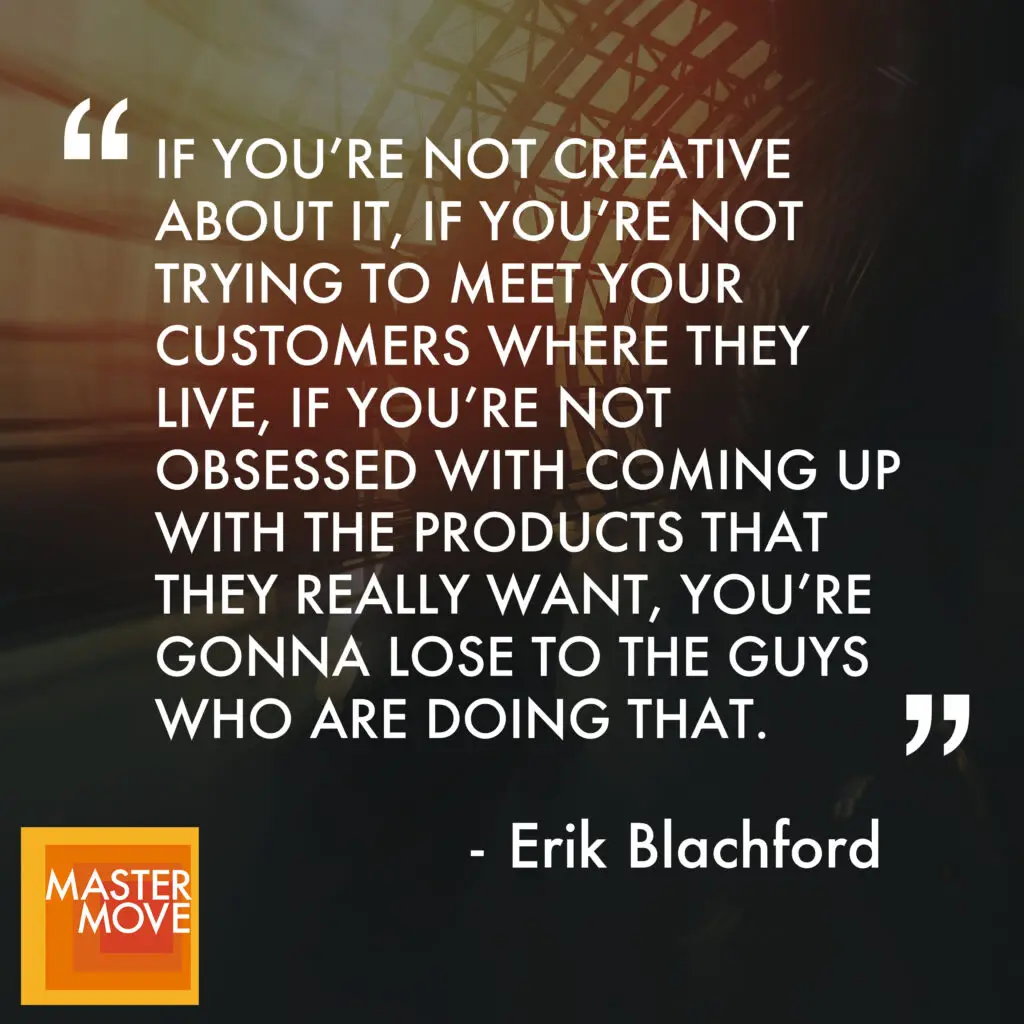
>> Erik Blachford: Well, I mean, maybe that’s the place to start. so I’ve spent most of my time as an investor and a board member, an advisor, mostly around founder led companies. that’s what I like. you know, my, my, my preference is a Lot of the time I’ll fill an independent board seat. when a company is raising money at their series C or D, before they go public, I can have very few examples where it hasn’t been the founder still in the CEO seat, gutting these up, that’s just, that leads to a certain kind of feel, a certain kind of culture and so on. but look, you know, companies get to a certain size, and a certain duration and founders decide they want to do other things and that, that, that makes sense. Right. a lot of the time that’s going to change the culture because just by having somebody new in a leadership position, you’re going to find that the, the day to day communication cadence, everything is going to change because of course it is. Right. That just makes sense. and there’s countless examples and there’s, there’s you know, chatter about the good and the bad of that sort of thing. there are certainly examples where having somebody step in with a very financial mindset. and look, I think there’s a lot of incredibly capable private equity firms who buy companies, put in very financially oriented management, actually turn companies into something that much more efficient, and better companies and then end up selling them. And I mean that business model is very well established and it works awfully well. And, and I do think that we tend to hear the, we tend to hear the bad stories an awful lot more than we hear the good stories. and we sort of forget that, you know, we’ve also got all these companies out there. There’s the Warren Buffetts of the world, buy the companies and they just hold them and they, they operate them. But don’t, don’t think that Berkshire Hathaway is not a financially oriented owner. Right? So it’s not like there’s something inherently, inherently bad about, about that sort of thing. But there is also a balance. And if you’re in a, if you’re in a company that is a product oriented company with a consumer facing go to market, and you end up with folks in charge who don’t really understand that stuff all that well, they tend to become very risk averse. and risk aversion, as anybody in any consumer product goods company will tell you, is the kiss of death. I mean, you know, it’s that, it’s that old thing. If you ever played sports as a kid, you know, if you, if you play a sport or if you ski or if you do any of these things and you don’t do it all in, you’re much more likely to get hurt. Right? And that is very true on the field of any kind of consumer marketing endeavor. If you’re not creative about it, if you’re not trying to meet your customers where they live, if you’re not obsessed with coming up with the products that they really want, you know, you’re gonna lose to the guys who are doing that. And it doesn’t matter how great your profit margins are for a couple of years in the middle, it doesn’t matter if you end up losing. And there’s, there’s example after example of this. And so, you know, I think there is absolutely a place for good financial management and sometimes it’s really required for short periods of time as well. But overall I definitely feel like for marketing oriented companies you can’t do that for too long, because you lose the magic. And, and let’s face it, you know, branding, marketing, advertising, there’s a flavor of magic to it. I mean we all, we all love a good story. We all like being entertained and part of we, we love about our favorite brands is story that us about ourselves. I mean, I know it’s a cliche, but it’s true.
>> Craig Gould: So tell me about serving on boards, you know, because I mean not every board’s the same. I mean you, you have, you have small startup boards, larger public boards, nonprofit boards, even your roles on a board. I mean you could be on the compensation committee, you could be an executive chairman, coaching, advising, being independent director. I mean, I feel like you’ve probably worn all these different hats. How do you see your role? How do you pride yourself on how you come onto a board and how do you try to operate as a board member?
>> Erik Blachford: So it’s true. I mean there are all the different hats at all and so on and you do you get used to them when you’ve been doing it for a while. you know, I’ve kind of, I do sort of have a couple of my, have a sort of my golden rule of being a good independent board member, which I will just, which I will tell you, which I always tell and so on is I do my best. I always try to say what I actually think and you know, I try to have that be an informed opinion. Not just popping off, but you know, I always try to be honest about it. and, and, but, but the corollary is, is I don’t get upset if it then doesn’t go the way that I want it to. and that’s, that’s a lesson of, that’s taken some learning. but I’ve discovered over time that, there’s a certain, there can be sort of pressure on a board to kind of go along with, especially a charismatic Fanning CEO. and you know, in the same way that nobody wants a management team full of yes men, you don’t want that on your board either. It’s important to have people on the board say, look, rightly or wrongly, this is what I think. And it is not the same thing that you think, because that’s how ideas actually get pressure test. But what you can’t do is then if, if the, you know, the other opinion wins the day, you can’t pout about it, right? Because then all of a sudden, next time you bring up the thing that you actually care about, everybody goes, oh, God, here he goes again. And now if he doesn’t get his way, he’s going to be all pissed off and so on. And, you know, we’re all still just, you know, it’s just humans around a table, right? Still. but once, once you get the trust of a management team that you’re actually saying what you think, not because you want to get your own way, but because you think it’s important for them to hear, you can have a much richer conversation. And everything around trust and coaching and everything just goes up a great level. You have to trust as a board member, that in the case where you overstep, there’s enough trust built up that you’ll hear about it. At Peloton, where I was on the board for a long time, there was a moment where some advertising issue, and I was in touch directly, was running the advertising, which something that I knew about, I’d been involved with it and so on. and the CEO, John Foley, called me up, he said, you know, I love that you’re, you’re wanting to be involved here, but it’s too much. It’s too much. You’re getting away, so that the opinions, they need to actually come through the proper management channel. And he was exactly right. And, you know, it was the sort of thing where I came out of it thinking, boy, that’s great. That’s. That’s a situation where he’s comfortable saying to one of his board members, hey, you’re in a little too close, right? That comes from that sort of trust that you go back and forth with. So, so I think that’s kind of my, my main rule is just to to be, to be present in a way where you, you’re not hedging your bets. You’re not, you’re not trying to be the guy who’s on the right side of how things come out. You just say what you actually think about stuff. and you know, as long as you do that consistently and you don’t get yourself, upset about things that they don’t turn out your way, that leads to the best outcome. And of course all the other board stuff in terms of serving properly on the committees and stuff is kind of the ante. Right. I think you’re asking the higher level question.
>> Craig Gould: I was listening to a conversation with Scott Galloway the other day and he was saying that when he was on his first board, he kind of went in and was riding roughshod and trying to poke holes in what the CEO was saying and, and real quickly understood that with some pushback from people and just some maturity realized that really, really is not his role. the role is to be an advisor and to support and try to do whatever it takes to make the company win. However, when the time comes, you need to be able to hire that next CEO, right? So your two jobs are supporting this one and being able to think about replaces. So I guess that kind of leads me into thinking about secession planning. If you, if you don’t have a plan, you’re planning to fail. I mean, it’s kind of an awkward dance though, isn’t it? Because, I mean, you know, the CEO kind of steps into a job knowing that he’s a, steward, he inherited a chair that he’s going to pass off to somebody else. What are the realities in terms of the mindset of a CEO? I mean, are they thinking, I’ve gotten this throne and I want to hold on to it as long as I can, or do they understand that it’s a season and I need to make sure that I’m shepherding within the organization somebody that’s capable of taking the wrongs. What’s your view on that?
>> Erik Blachford: Well, I guess I’ve been lucky. so first of all, I’ve mostly, as I said before, dealt with founder led companies. So it’s a bit of a different, different issue. And in a few cases where it has been somebody who’s coming from outside. yeah, I’m not, I’ve not seen a lot of people gripping tight to a throne. That’s not, that’s not it at all. I would say, look, in any company with any kind of real maturity in its Management has got m, at least an annual board conversation. and I would go a step further than that and say certainly for most board members it’s really important to understand and have some relationship with the layer of management, below the CEO and often with people below there too. And the reason for that, actually it’s funny, it helps a lot with succession planning, but the reason for that is that in a crisis everything works so much better if there’s some kind of pre existing relationship, right? If the first time that you ever present to the board is when something has gone really wrong in your world, that’s a very uncomfortable situation, right? You’re sitting there with a bunch of strangers and you’re going. If, on the other hand is a thing where over the years you’ve presented lots of times when things are going well, you’ve been at dinners with the board, you know, you’ve sort of swapped some stories about stuff, you know each other a little bit. Ah, now we’re on the same team, right now succession planning is the same thing, right? You can, you can run it I guess in a certain very old school way where you’re kind of everybody, look, be a little scared, look at these talented people just below you. I mean, I guess there’s some cartoon version of it that would be like that, but no, it’s more like, okay, we’re all here to protect this business and this enterprise. Let’s make sure that if something happens, we’re, we’re ready for that, you know. And you know, it is a little different in a world with remote work and so forth. But I mean, let’s face it, there’s an awful lot of attrition that happens from management ranks that has nothing to do with anybody’s performance. It often has to do with life events. You know, somebody, somebody’s spouse gets transferred and they’re like, well, you know, we gotta go and that’s that. And if you get caught flat footed as a business and you don’t have the people ready to go in, I mean there’s lots of talent out in the world. You can hire a recruiter and you can do the thing. But I mean really, I mean my preference has always been a hire from within if you possibly can. And part of every manager’s job is to make sure that they know who the people are who would step in. And that conversation should be very easy at a board level. Usually it’s run by the comp committee. Usually do it once a year. Sit down, you have the sheet, you’re like, yep, here are all the people. They all know it. A lot of the time they’re in the room. You know, this isn’t some drama. you’re not, you’re not trying to make it like that. That, that’s the way that should work from my point of view.
>> Craig Gould: So I think that’s a great lead in for my last question. And that is, if I’m listening to this podcast and I want to be one of the names on the sheet, how do I get there? How do I separate myself from my peers? How do I manage my career in a way that I wind up not only being prepared, but noticed? Because my perception is that there are a lot of people that do good work but maybe never, never get noticed. And so what advice might you have for somebody who is wanting to like, take the reins on their, their career and make sure that their name eventually winds up on that list?
>> Erik Blachford: Well, you, usually, it comes down to doing the. Well, usually. I guess there is no usually. but I would say, my advice would be, as you’re making your way up, you want to be multifaceted. and so if you’re the person who has spent your whole career in one function, find a way to spend time at a different function. I, mean, it, it is a very different thing talking about somebody’s capabilities as a, an engineering manager if they’ve actually also spent a bunch of time in hr, say. Right. just to pick a sort of a random example, a marketing person who has come across from a, stint in product planning. Well, that person is different from someone who’s never done anything but managing an agency. And a lot of the time that leads to some pretty uncomfortable moves that people are making. It’s much easier earlier in your career as you’re making your way up. most managers, you know, interestingly enough, most managers very open to this and it’s not a sort of well understood, but going to your manager and sort of saying, look, I love this, but I want to, I want to grow horizontally a bit. You know, can I go and if I can figure it out, can I spend time, in the group? You know, a lot of the time that’s going to be a conversation that everybody wants to have. And then as you go up now, you’re different from the other people that they’re looking at for the, for more responsibility because you, you’ve got something that other people don’t have because you were willing to take the chance and you followed your curiosity into whatever that might be. the other thing, which I guess is sort of an obvious thing, but, you know, how would I put it? a lot of the time on your way up, there are certain moments where. And a lot of the time it’s a presentation thing or it’s some task you’ve been given that’s a little outside the ordinary. And you sort of recognize on some level like this actually might be a fairly important thing for me. Don’t half ass those things happen. Right. that is, that is one of those things where there are moments like that in everybody’s career that put you on the radar in a different way. If you approach them in a way that’s unexpected. you know, I sort of. A good example, a good example of that comes from way back in Expedia days when we were, we had a corporate travel, ah, effort going. and I can’t remember exactly the job we were hiring for, but I think it was the head of product for that. Get it a bit wrong. And so people were you know, putting their hands up and saying they sort of, oh, you know, they, had this product experience, and they’d really thought hard about corporate travel and you know, they were looking forward to dying and so forth. And then there’s a guy who shows up with 15 perfect PowerPoint slides. And of course his way pre AI he did them, who had thought the thing all the way through and it came with a plan and you know, guess who gets the job, right? And, and it’s just effort smarts and really wanting something, but also doing it in a way that’s very visible. So everybody’s like, wow, that’s impressive, right? He’s the guy who did that. So, so I know that’s a basic thing and it’s sort of almost sounds like a cliche, but that, that is how you do it. You know, you do well at what you’re asked to do in a way that’s got a little sparkle to it, you know.
>> Craig Gould: Well, Erik I really appreciate your time today. If if people wanted to keep track of you, connect with you, you know, see what’s going on in your life, where, where’s the best place for, for people to keep an eye out, eyeball out for Erik Blachford
>> Erik Blachford: Oh, I’m pretty easy to find on LinkedIn. That’s right. I post most stuff, so, you know, that’s easy enough.
>> Craig Gould: Well, man, I, I really appreciate, appreciate your time today, and I. I really appreciate you being my guest.
>> Erik Blachford: No, happy to do it. It’s great. Great. I love your show.
>> Craig Gould: Yeah.