
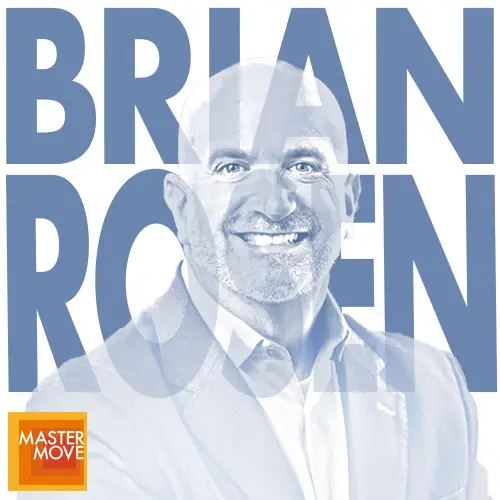
Brian Rosen is the Chairman and Managing General Partner of InvestBev, the leading private equity platform in the beverage industry. A third-generation entrepreneur, he began his career in his family’s liquor business, which grew into the largest grossing retail chain in its category before he led its sale to private equity. Today, he manages hundreds of millions in assets across spirits, beverage brands, and alternative investments, bringing a unique perspective on capital, brand building, and industry evolution.
>> Craig Gould: Brian Rosen, thank you so much for joining me today on the podcast. Brian you’re the chairman and managing general partner of the InvestBev, the leading private equity platform in the beverage industry, and a third generation entrepreneur who has spent his career building, scaling and investing in alcohol beverage brands. There is, there’s a lot there. I’d love to talk to you about, multi generational businesses, this particular industry, just the day to day of your life. But I’d love to start these conversations with one common question, which is what are your memories of your first job?
>> Brian Rosen: Well, I being in a family business, I would. Well, first of all, thanks for having me, Craig. I appreciate you having me on. you know, when you’re in a family business and your family is, you know, my generation, I’m getting older and my father is passed, but he grew up during the depression. So you’re going to, you’re going to have a lot of people. Those memories are going to go away because those people are going to pass away. my memories, my earliest memories are the only time ever to be able to see my father was to go to work. He was a seven day a week guy until he was in his probably 60s, 65. And so if I wanted to have any semblance of a father son relationship, I would have to get up at 4 in the morning and in my, on my summers or during break in high school and junior high, in elementary school, etc. And I would have to get in a car with him. And there was, you know, it wasn’t, there was no, I couldn’t play on my phone, I couldn’t listen to satellite radio. I was going to sit in the car and you know, and so the only time to see my dad was into getting doctorated into a business was that my first business that I was in that wasn’t my family was, you know, driving a pizza delivery car or Subway sandwiches, which I got fired from Subway, Record City, which was a record store in the suburb where I grew up.
>> Craig Gould: So how do you get fired from a sandwich artist job?
>> Brian Rosen: I was a sandwich artist. Thank you for recognizing the power of being a sandwich artist. I’ll tell you why. Because I was 15 or 16 years old, I ride my bike to work and one day I had a flat tire and there were no cell phones, there were no way to communicate. And I was, and I, and I didn’t have, I didn’t carry around tools on my dirt bike. I didn’t know, you know, what that was. And I got A flat tire on the way to work. I missed the shift. And the entrepreneur that owned the place was very unforgiving for that kind of thing. And he had released me, into the wild, for that, for that error. And by the way, if you’re listening now, sir, I, was, ah, I could have been a great sandwich magician, I think they call it. And but my calling was, greater than that, into private equity. But that’s how I got fired. I missed a shift because of a flat tire. I was 15 years old and I was devastated. Devastated.
>> Craig Gould: So you, you go to college and after college, is it straight back into the family business or did you.
>> Brian Rosen: It’s grad school as well.
>> Craig Gould: Okay.
>> Brian Rosen: My family business was a chain of liquor stores in Chicago. And my grandfather, Sam Rosen, was the very first liquor license ever handed out after Prohibition. So that one license turned into a saloon, turned into a tavern, and became the largest grossing retail liquor stores in the country. Now, depending on what coast your listeners are from, if you’re on the West coast, it’s BevMo. If you’re on the east coast, it’s total wine. But we were Sam’s. We were the predecessor of them all. In fact, both of those companies tried to buy us multiple times. and so I went from undergrad to grad into the family business. And like any good University of Chicago MBAs, I started out as a truck driver and did that for many, many months for my family, and then a cashier for many more months, and then an aisle worker for many more months, and then an assistant manager, et cetera, et cetera. You get the point. There were no easy, there was no handout. It was not a, Larry Ellison, David Ellison thing. You know, I didn’t go from braces to running Paramount. I went from braces to driving a truck and did that for months to learn about product, learn about customer service, learn about, the people we were delivering to every day. And so, so, and then that evolved into eventually becoming CEO of a many hundred million dollar operation.
>> Craig Gould: So what, what did you learn in all those hours just observing your dad? Because, I mean, it sounds like your management training program started pretty young. What did you pick up from your dad in all those, those years when that was your time with dad?
>> Brian Rosen: Yeah, so the phrase that is, that should be called out is picking up from my dad. My dad wasn’t a teacher. I had to learn by visually watching and I had to learn by, kind of shutting up and just, and, and, and observing to your Point. And, and so I learned the one thing that I use, I used, I learned many things. So, but what I learned now where I can look back as a 56 year old guy and look back and say, I learned perseverance. I learned hard work. I learned that you don’t have to be the smartest guy in the room, but you should always outwork your competition. those are the positives, the negatives. I also learned, right, I learned that customer, service is a shit hard thing. Customers are not always right, but always think they’re right. I learned that my dad at a very young age had bad knees, bad back, always complained about being sore. And I. And that, that always stuck with me. So it made me really want to pursue a more professional role within the same industry as opposed to more of a retailer role in the same industry. And one final thing on that, my dad, like probably a lot of dads, and I’m a dad myself, so maybe I have some of these. They always have great phrases that don’t become, they don’t seem great until later in life. And one of the things he said to me, which I bristled at at the time, but makes a lot of sense to me, is he would say, hey, Brian we work for the money, for the rich, the money works for them. And I thought it was really a, was a little bit sad to hear because we were not broke. but he thought of himself as a. No matter how successful he became, he always thought of himself as a pauper or the underdog, if you will. But what it did do, when you hear a phrase like that and you see your father icing his knees after a day on concrete floors, you know, like, I want to be in this industry, I like the industry, but I want to be on the other side of the counter. I want to be on the side that gets served. Now that’s not. That service is. And so that kind of began at a young age. My desire to be in the financial services side of this business as opposed to the retail side, if I remember
>> Craig Gould: right, it’s us, Chicago, your mba, like by the time you get out of there, was your head already full of all these ideas? And then, I mean, how did, how did you reconcile stepping back into the business after having gone to grad school and being filled with all of these principles?
>> Brian Rosen: It can be argued also that entrepreneurship is an MBA as well. So the textbook principles, I don’t know if I use daily as much as I use the network daily. The network of the people I’ve met and come in contact with are the doors. It’s open for me. But the actual economics or finance or legal principles that you learn in, you know, years one or two, I think the days are over where that was your only way to get ahead in the world. I think you can get ahead in the world by networking. My son, who’s 25, would say that your network is your net worth. And he’s not incorrect. it was very frustrating for me, Craig, to get go from graduation on a Saturday to driving a truck on a Monday, and very frustrating. And, and it caused a lot of heartache. And while my peers went on to JP Morgan or Goldman or Aries Capital or a lot of the places that recruited from Booth, I went to a liquor store and drove a truck. And I knew that wasn’t the end game, but it was very humbling, very hard. And so the only way I reconciled it is that I knew I owned a piece of this business. I knew I had equity. I knew that I would make more money than perhaps my peers in a business that I controlled. because equity always makes more than salary, theoretically it should at least. and so that’s how I, I dealt with it. But it was, look, man, when you’re 23 or 24 years old and it’s a Friday night and you’re living in Chicago and you’re single and all your buddies are going to the bars on Friday night and they didn’t even get going until 10, 11 o’ clock at night, they pre game at someone’s apartment, then they go out to some Chicago bar, throw a dart, name your name, your joint. And I would go home from work because I worked till 10 o’ clock on the Friday night and then my Shift started at 8am on Saturday, I picked all of that and I was, I was, I regret, I don’t regret it now, but surely in the moment I was, I was pissed. I was disappointed for sure.
>> Craig Gould: Ah, at some point in those first couple of years, you negotiated a way that you could kind of get off the truck, get off the front line and kind of distance yourself in an office and kind of think of how to grow it beyond the walls of the, the location there in Chicago.
>> Brian Rosen: Yeah.
>> Craig Gould: So how did, how did that work?
>> Brian Rosen: The, the, the one thing my dad did do and, and you know, it’s my dad since passed away about a year or so ago. So it’s not. I reconciled with all of these things. You know, we’ve reconciled together with these things. But the. The one thing that he did do and he’s very good at, was while he didn’t appre. He didn’t. He didn’t subscribe to this notion of, hey, you get a promotion, you get a raise. It was entrepreneurship, and it was a family business no matter how big it was. Hey, if. If, if a stock guy doesn’t show up today, you’re taking the carry out to someone’s car. I don’t care how educated you are, you know, that case needs to get from A to B, and someone’s got to do it. And if the cooler needs to get stocked, and if. If so and so does not come in today, then someone’s got to stock the cooler. And so, Brian either you do it or find someone to do it. but the one thing he did do, which to his credit was what grew the business exponentially, was he didn’t put any leashes on me, any reins. If I had an idea from my big brain, from the big fancy education, he let me run with it. I put us on the Internet in 1996. We’re the first wine store online. The first year, we did $7 million online. And there was no talk of. Now it’s commonplace to have an e commerce site, and the understanding of your fixed costs remain the same because your inventory is owned by your physical footprint. We were way ahead of it. The first we did. I did before Zoom Calls, I did a thing where I started a subscription wine club where I sent them a bottle of wine a month and two. And two, Riedel crystal glasses. And then we did a Zoom call, or Zoom, a conference call with a sommelier. So talk about the wine as you’re drinking it. But it’s all via telephone. conference calls used to be a thing. And, but what I was doing is selling a bottle of wine a month to 100 people and two glasses. And glass had great margin. So these m. Things, they just let me run with. I created, the Chicago Wine and Food Festival, which became the Chicago Gourmet Gourmand now. But back then, it was. We created it from scratch, modeled after the South Beast, South Beach Food and Wine Festival. So he let me do what I want as long as it made money, to his credit, you know, and so we did these things. And so I, until my time to assume the mantle as CEO or president, I was able to get my intellectual stimulation along the way, without really much flack.
>> Craig Gould: I’ve had guests on that have talked about multi generational businesses. The, the concept of having a centurion, ah, business that can last for, for more than 100 years. It’s probably never easy when you get to a point where you’re, you’re twilighting a family business.
>> Brian Rosen: Yeah.
>> Craig Gould: Can you talk about that first transaction with private equity and what did you foresee the future of Sam’s being when you entered into that?
>> Brian Rosen: Well, it’s important probably to understand the circumstances as well. I thought, and still do, maybe this is just ego. I, I was the smartest guy in the family. I had a brother and my father, my father’s high school educated. My brother got his master’s from Kellogg, but he was more behind the scenes. And I was, front center, if you will, in, in the spotlight and a CEO of this, of this world’s largest company in our category, highest grossing company in this category. So I was out there in the public domain and I saw things that, I saw things in the industry coming that I had to explain because I was out there, not because they didn’t see it, but because I had just, I was at the front of the ship. Right. one of the things was when we were doing our record years, 100 million this year. 140, 160, what have you. Walgreens, the, the, the national chain did not sell alcohol. CVS did not sell alcohol. Whole Foods didn’t exist in the same way it exists now. Same grocery, Target did not sell alcohol. So we were picking up all of this business just because, not because we were better, not because we were cheaper, but because we were just the option. And in Chicago, where our flagship stores were, these guys were all in between the pockets of wealth in downtown Chicago and our stores, they. Because to have a 30,000 or 40,000 square foot store, you can’t be in the heart of the city. You have to be off the beaten path a little bit to get the space. So, people, would come from, in Chicago, the Gold coast or Lincoln park or where have you, and drive 15, 20 minutes, fight our parking lot to buy a six pack of beer and a bottle of wine. But as time goes on, Walgreens sells it and, grocery stores sell it and Whole Foods sell it and CVS sells it. So the thing about our business, it’s just a commodity. It doesn’t matter if you buy Tito’s Vodka from Walgreens or CVS or Whole Foods or Sam’s, it’s just Tito’s vodka. Price becomes the driver, period. And to the consumer, if they’ve got to drive 20 extra minutes to save 40 cents, they’re going to say, forget it. I’m going to pay 40 cents and be home a half hour earlier. And so all of these things were happening around us and I did not see a great way to win against Whole Foods. I did not see a great way to win against other CVS Target. And so our revenue kept going up, but our average cart kept going down. We went from 160 to $97. By the way, industry average is $19. So we were way above industry average. But these, the, the normal pickup during the week of a six pack and a bottle of wine, they were trailing away. And so that happens enough time, you’re going to erode your revenue. And I saw all this and I’m like, forget it. We can’t fight the battle because we’re under capitalized for a fight. We’re perfectly capitalized to operate our business with no competition. And so I wrote a pitch book myself alone. I didn’t have an investment banker. I didn’t, hire any M and A firm. I, I used everything I learned in school and every contact I had. And I wrote myself, this is Sam’s wine and spirits book and we’re for sale. And I shopped it around the country. and, and then I, I found a firm weirdly based in Chicago and sold 80% of the company to them and kept, I retained 20% of my equity. and that was in 2004. 24. I did that and I retired my father and I retired my brother with the transaction.
>> Craig Gould: You know, in terms of like the family business, you’re still in the family industry. Do you, do you feel like, has your son gotten into the industry? And, and do you feel like, invest Bev is a continuation of this sort of as the, the Rosen family business?
>> Brian Rosen: It is the Brian Rosen family business. I would love my son to work here. He’s an M and a banker in New York. and they pay him a ton of money and he is, about four years out of Kellogg, out of Northwestern, mba. So he’ll, he’ll, his path hopefully will lead back here. He’s got a whole life back in Chicago, he’s got a whole life in New York and, and you know, relationships and all of those things. I would love for him to come here, but, but I am a poster child for tough family dynamic, you know, and, and my relationship with my father, didn’t, really, wasn’t really great until like his later Years. Because all we. All we had in common was work. It’s all we did. So do I. So the question, yeah, your listeners should ask themselves, or, you should, you know, put a. A phrase to it, is, you know, what is the benefit of family business? And what is the. I guess the lack of benefit? And, and the family part of family business is the hardest part. I could have my son in here to help me, a guy I trust and love and. And is smart as hell, help me operate some of my, you know, join the team here of, you know, which there’s a couple dozen people. but at what cost? And I’m not talking financial costs. At what cost? Right. So. And what is it worth? And so there are a couple ways. I mean, people do do it, and they have great success at it. So either I think you need to be a family business where the family are just employees and they have their autonomy to do what they need to do within the corporate structure, or it’s, or it’s the family part of family business where everyone’s coddled and, and, and, you know, David Ellison type thing where everyone is just. I’m sorry, David, for picking on you today. Please don’t cancel my Paramount plus subscription. but I, I don’t, You know, I’d like him to be here, but. But he’s got to want to be here first. And, it’s gotta be a great opportunity for both people invest.
>> Craig Gould: Bev, where was the, where was the light bulb for you? Is it the fact that you. You had this. This kind of milestone moment where you have access to capital and you. You see an opportunity? The, the way these things work, you’re not working with your own capital. You know, you’re working with other people’s money. Right, Right. And so what. What did you see in the market that. That told you that investing in brands and investing in the. The distillates, was, you know, kind of a golden opportunity, a niche that nobody else was really paying attention to?
>> Brian Rosen: It’s important to understand what I said earlier about what side of the counter do you want to be on? You know, and then the other phrase was, you know, the rich are different than us, that the money works for them. And those, those statements really stuck with me. And when I, I, so I sold the company, I left that position as CEO a year and a half later, and I went to work at Price Waterhouse. I was in their adult beverage division. And one thing I noticed being there was. There was this opportunity in Elk Bev that People were not paying attention to because a hard. It’s a, it’s a complicated industry and it’s got a lot of regulation, etc. So I went to my boss at PwC and I said, hey, I have an idea for how to make a billion dollars. And, he said to me, we don’t do ideas here. We execute on consulting agreements. You know, we, we’re advis. You’re. I was in the advisory services division and. And we advise our clients on ways they can be better. We don’t participate ourselves. That was a Friday, and I resigned on Monday and started, Invest on Tuesday, of that year. And now we manage, you know, about $700 million. and the opportunity that I brought to PwC way back when is the very same opportunity that we execute on every day. It’s taking a business that’s highly fragmented, highly dislocated, has been forever. And, greasing the wheels, if you will, or helping to support portfolio brands, to their eventual exit because they exit out at 18 to 20. Multiple of revenue because so few of them succeed that they’re over. They get overpriced, on the distillate piece. That’s another unique, kind of investment strategy where we’re. We buy bourbon barrels in Kentucky or Ireland or where have you. And, they naturally age just with time. They just age. And, as such, if you hold the asset and you exit the asset properly, you have natural accretion, right? It’s naturally accretive. And that was what we saw there. So you buy the barrels, you suck up the inventory, you hold it till the brands need the inventory, then you sell it back to them. You play this position of patient capital. Our first fund, was about $23.5 million with 10 million in sidecars. Our second fund was 71 million. Our third fund, 51. No, that’s incorrect, sorry. Our first one fund was 5 million, second fund, 23 plus 10. So 33 million, third fund, 71 million, fourth fund, 51 million. Fifth fund is 225 million. And that’s just on the equity side. We also have a structured finance division, a real estate portfolio, insurance portfolio. So my goal as the CEO here is to have $1 billion under management by 2028. And, you know, we’re three fourths the way there, or.
>> Craig Gould: So do your funds kind of match the duration of holding those distillates? Because, well, the alcohol distillate is, distilled. And then it needs to sit for four years before it can be considered usable for the rest of the process. And the, the liquor companies don’t want to keep that on their books. And so you, you’re basically buying a commodity, you know, up front and you’re being rewarded for, for holding that inventory for four years. So because a lot of times in private equity and venture capital, you know that, that horizon’s like 10 years. Are your funds closer to that four to five year window?
>> Brian Rosen: They’re four to seven. And that range, because you have to allow for the brands to matriculate too, not just the barrels. But we, we have normal fund life form. Normal documented Fun Life is 10 years or less or, you know, and we have that, it varies. Some of our fund, five is a six year fund. We don’t want to be in these things for 10 years. We want to get in, strike, get out. The three year window is pretty apropos for these barrels. Three to four years. And 70% of our, 70% of our portfolio is barrels. So we like to think that the LP has the greatest chance of success when we exit the barrels and then the icing on top ends up being the brand.
>> Craig Gould: Tell me about the adult beverage business. It really seems like a commodity business in a lot of ways in that the, the only difference is supply chain logistics and brand, brand, brand, brand. How do you identify with the thousands of brands that just pop up and go away in, in this business? How do you identify brands that you think are capable of sticking and that you can put a push behind?
>> Brian Rosen: The phrase we like to say, and I’ve said this since my days in retail, is because you make a new brand, you don’t make a new drinker, period. And so it’s really easy, it’s really easy to, to start a brand. It’s not easy to sell a brand. And by sell, I don’t mean sell out, I mean just sell the product into retail, or bars or what have you. The entrepreneur doesn’t get all that they, you know, it’s the same story I hear a hundred times a day, which is, hey, my buddy and I were drinking bourbon in this bar and we were looking for a bourbon that had a gasoline flare to it and we couldn’t find one, so we made one, you know, and, and, but here’s the sad part of that story is that you and your body’s the only ones who want that. So you spent $300,000 of your IRA and no one wants what you’re making. The key is to, in our eyes is you got to have A brand that’s well capitalized. You’ve got to have a brand in the portfolio. They’ve got to be capitalized because for every dollar in sales, you have to spend $5 in marketing, you have to have a brand that solves for X. Whatever. X’s, Casa Amigos wasn’t better than any other tequila necessarily. Now it’s proven it’s not even organic, but it was the first celebrity brand period. And then three or four celebrities jump in the bandwagon and everyone else is, is dead in the water. Right now. No one’s talking about JLo’s non alcoholic spritzer. It’s just, it’s, you know, in fact, being a celebrity brand now probably hurts credibility. But, but Randy, Gerber and Clooney were the first. Ryan Reynolds was great because he is a, he’s a marketing machine. He marketed his own product and, and so how does it fail? It can’t. As long as he’s in front of the cameras, it doesn’t fail. but I can, I can name five other gyms that fail. So the way we pick brands, we people submit their brands to us for consideration. They go through all sorts of layers and investment committees and pre committee and all these different things. And then we just, then we have the founders come out. We’ve got to meet them, we’ve got to understand what their methodology is. What’s your market? Are you owning your market? Are you owning your backyard or are you owning your region or what? What are your goals? And I will say this to your listeners. If you ever go into any GP’s office, any founder of an equity firm’s office like mine or other, and you say, hey, The TAM is $800 million and if we get 1% of that, we’re going to be great. You be prepared to get kicked out because it’s such, because it’s not real. Like the, the TAM is, acts great. You have no ownership on the tam, you know, and it just shows a lack of understanding of the industry, at least in our case. But picking a brand is hard and we’ve had some dogs and we have in our portfolio now we’ve got quite a few winners. So I’m very across all the portfolios. So I’m really pleased about that. but we’ve had some shitty ones and we’ve made bad choices. And you, and you, we get smarter, we learn more.
>> Craig Gould: So what I’m hearing is that the way you break up these funds, you know, 70% on holding the, the barrel, distillates and 30% wagering on the brands. You’re kind of have an investment mix there where you kind of know how the, the distillates are going to appreciate. And, and even if the market’s soft at the end, you know, that just means that the barrels are worth more.
>> Brian Rosen: Yeah, well that’s, that’s, that’s the thing about the investment is that if I don’t sell a barrel in X period of time, the very next year, I get a more expensive barrel, it’s aged more, the juice is better. And I would, people who don’t understand our industry, I would, I would. Let’s look at by way of example, let’s look at the lumber industry. The lumber industry. When interest rates are high, when the Fed doesn’t lower rates and rates are high, it means housing starts are down. When housing starts are down, that means to the, to the layperson that people are not building houses where they’re not building houses. No one’s chopping down wood to make the, the studs to build the house. And as such they don’t chop the tree down. Therefore the tree gets bigger next year or two years you get more tree from the same footprint. And so it’s no different in, in bourbon. If I don’t sell a barrel in three years, four years, five years, all I get is just a better barrel that’s worth more money to someone. And so we feel the barrel industry is pretty risk averse and we like that.
>> Craig Gould: And so that allows you to, you know, maybe have a little bit more of a wager on the brands. And you know, just like with a VC firm, you can expect only 1 out of 10 to really maybe go 10x. Do you kind of have a venture mindset in the brand side of your business?
>> Brian Rosen: Well, we call it growth equity as opposed to venture equity, ventures. Equity to me is a risky word. It almost gives the GP or the CIO license to fail. Hey, you know, only one’s going to make it out of 10. You know, you knew that it’s venture. So I don’t, you know, I don’t like that, life raft, you know, for my CIO and myself, I want all of them to succeed and so we invest a little bit later, stage more growth driven, than venture driven. And as such, we think we’ve got a better than a 1 in 10 shot and the numbers are bearing that out as these, as the funds mature. but we, we like when we come into the brand because it also means that the founder has made all their mistakes, hopefully already on their own dime, not mine.
>> Craig Gould: When you were describing bringing in, all these people to talk about their brands, you didn’t say anything about having tastings, which, leads me to think that it really is all about the brand. And I don’t want you to necessarily reveal your secret sauce, but you know, what separates the brands that are successful from the vast majority that fail.
>> Brian Rosen: I wish the business was so complicated that I had a secret sauce like that. I mean, I wish the business was so advanced that I had some kind of, you know, coke recipe in a safe somewhere 50 yards underground. I don’t. It is. The beverage industry as a whole is marketing. And just as long as the drink is palatable. Tell me how liquid death is a billion dollar company. It’s water in a can. It is water in a can, period. When you look at why some wine, what box wine? The cheap wine that you, you get the bottom shelf of your liquor store. What’s different in Sutter Home and Franzia, and you know, Calatera and Blossom Hill? These are all just big 6.99, 7.99 wines. You know, the difference is the packaging because a cheap cabernet is the same no matter what label’s on it. The brands that win are the ones that understand the consumer the best, activate the best and market the best. And the one point I’ll put on that is in our business because of the legal constraints of the three tier regulatory system. As a brand you’ve gotta be cognizant of who buys you, like what retailers, what wholesalers, and then who buys you off the shelf. You’ve got three different audiences as a brand. One audience is the distributor who says I’ll buy you, but then I need, I have to get it off my inventory in 30 to 60 days. Then you’ve got the, the retailer who says I’ll buy you, but my bill is due net 30. Where’s that consumer going to come from? Then you’ve got the consumer who says I’ll buy you, but, but you got to be fair priced and you’ve got to be tasty and you’ve got to be unique so I can talk to my friends about it. So you got three different marketing messages for the same brand. I don’t know of another business quite like that. most like you look at auto, for instance, if you’re a Ford dealership, you’ve got to buy the lineup of Ford cars and the consumer wants a Ford. So you’ve got natural push and pull in our industry, there’s nothing natural about it. You’ve got to push it into the three tier system. So push it into distribution, push it into retail and on premise, which is bars. And then you’ve got to have the consumer pull it off the shelf. All that’s got to happen with the same can of liquid death, you know, so you’ve got to build. Yeah, that’s why to your point, you know, 1 in 10 is a great hit rate. you know, 10% are gonna kill it. So we look for brands that understand the nuance here. We look for brands where the founder says, I’m gonna get off my couch. I’m gonna send behind a table at a liquor store on a Thursday from 5 to 9pm and give samples of my shitty whatever out and hope someone buys it and buys it again.
>> Craig Gould: Brian Rosen’s secret sauce.
>> Brian Rosen: Yeah, well that’s, I mean, look, the advantage I have besides managing all this money for and being a trusted fiduciary is I worked retail for my entire life before this part of my life. So I sold my business when I was 32, so called 32 years I and I worked at the highest level of retail for this industry. I see how a consumer looks through a shelf. I see how when they walk into a retail store where the retina moves, A, because we did retina testing, but B, we know where the scope of vision is. And we also know that when the wallet is most full, when they enter a store, they’re most likely to make bad decisions. And when the wallet’s being taken from them as they travel, as they traverse through a store, these are all real things. It’s not as simple as let me put a bottle of wine in the shelf market 9.99 and hope it works. It’s not that at all. These stores are strategic and where they shift the consumer. Stu Leonard’s is a great example in Connecticut on the east coast. Total Wine, a great example on the east coast. And now coming to the center of the country in making private label product with high margin. It looks exactly like the real thing. You know, knowing the, the, the, the last part of it is the hardest part. The pull off the shelf. And I think we’ve got a really good indication from all these years and we’ve got, you know, experts out the wazoo here, that focus on how does that brand get into the stomach of the buyer and then get rebought. And then if you can do that and you’ve got a winning, you got
>> Craig Gould: a winning thing Is there still room for innovation in this business? I mean, I mean every once in a while you see something that looks novel like buzz balls or, or is it just blocking and tackling for you? I mean is it just seeing the opportunity for execution?
>> Brian Rosen: This is an interesting, interesting time right now in the industry because the innovation is coming from cannabis beverage and the innovation is coming from non app like athletic. That was an innovation and now it’s a billion dollar company. innovation is not coming necessarily in the main category drivers wine, beer, spirit. They’re coming in the ancillary, the orbital category that is now very hot rtds which is ready to drink non elk cannabis beverage. our cannabis beverage portfolio is up triple digits last year. Was up triple digits last year. I mean it’s, people want a, to get a sociable event on without being hungover. So that’s what the innovation is. It’s not in a bottle of Kendall Jackson Chardonnay. It’s just not. I mean it’s been the same for 40 years. Louvre Clicquot, which we were the number one seller of Louvre Clicquot and Dom Perignon in the country, has not changed ever. They may bring on a new varietal like a brute rose or a demisec, but at the end of the day that yellow label you see in your liquor store or wine shop or in the bar on during the holidays is the same exact blue clico that’s been there for 30 years. And I was selling, I was selling it when it was 1999 and now it’s 69, 69, 99.
>> Craig Gould: Do you still have money in cannabis beverage?
>> Brian Rosen: Yeah, we’ve got two brands, both in portfolio three that both are. One is called Can C A N N and one is called Willie’s. And I, and I suspect both of them are going to be home runs or at least good, good triples in my eyes.
>> Craig Gould: Well, if you could sit down with the younger version of you when you’re just entering the family business, what advice would you today give, give your younger self about building a career, navigating your big, the, the big decisions that were going to be ahead of you.
>> Brian Rosen: I made mistakes for sure and, and a lot of them were for the same reasons. and only in my later life did I learn how to adjust for them. One was kind of shut up and listen. Having a father that I had and growing up in the business that I did, you had to fight for airtime. So I would speak often and quickly and loudly, but I wasn’t Often correct. That came from just wanting to speak as opposed to wanting to say something. I learned later that if you don’t say anything, and Abe Lincoln actually said this, he said if, you know, I’d rather be silent and thought of as an idiot than to open my mouth and erase all doubt, you know. And so that was a lesson that I pick up, later in life and I wish I’d picked up earlier also. And this is important, this is. I tell my kids all the time, you gotta network and you gotta, and it’s a full time job and, and it can’t be transactional networking. That’s a lot of things that the kid. I live in Miami, as I told you, and everyone there is a crypto bro, or a Instagram model or influencer or, or real estate, and everything is transactional. What can you do for me? What can I do for you? Oftentimes, I know it’s a little bit of a page out of Gary V’s book, but it’s, you know, it’s a little bit of, I know. Well, I knew him when he was broke. is, you know, just give of your time, give of your energy, and then ask when needed, but don’t give and ask at the same time. And, and that is also important. I’ve been guilty of that too, of having transactional relationships, in, in my 30s and early 40s and 20s, of course. And those are things I would correct about myself if I could. I would, I would listen a lot more than I did, I talk a lot less. And I would work really hard on better business relationships because you, you know, there, to your listeners, there’s not a day that goes by, and this is no exaggeration or hyperbole, there’s not a day that goes by where someone says to me, because I’m in the same business I’ve been in for 50 years, or someone says to me, hey, I, I knew you 30 years ago. You were nice to me back then. Can you help me now? Or. I was a customer of your business. I’d love to give you a million dollars for investment. You guys did a great job. And I, I believe you understand the industry. Those, those are cultivated relationships. And if I didn’t learn later in life to pick those back up, I’d have a much harder time being the size and scale we are today.
>> Craig Gould: How do you work in a business where a great deal of your job description is asking people for money and not feel like it’s transactional? Where, or do you feel like you’re still giving in and not just asking.
>> Brian Rosen: That’s a great question, but I would encourage you to reframe it in that, I’m not asking for money, I’m giving opportunity.
>> Craig Gould: Right.
>> Brian Rosen: I’m giving them an opportunity to invest in a sector they can’t invest in on their own. I’m giving them an opportunity to hopefully get alpha on their irr. I’m giving their opportunity to get to an industry that’s been closed to the high net worth or institutional investor for as long as time has been. I’m giving them that. If they choose to invest, then there’s obviously a transaction. But it didn’t start with me asking for money. It started with me presenting an opportunity that I think has value. An opportunity I think is accretive to their portfolio. A non correlated or alternative investment idea should be in everyone’s portfolio because all you have to do is look at the News today on March 9 and see that the, you know, the market started out 500 down. Oil was over $100 a barrel. I mean there’s, this is things that are affected by the global economy, adult beverages and it’s totally non correlated. What you drink today is unaffected by the price of oil. And so I think of it differently than how you phrased it, which is, and I don’t believe it, you phrase it correctly. Right. I just think of it differently. I think of it as I’m giving an investor or an institution an opportunity to increase their returns by putting non correlated assets in their portfolio.
>> Craig Gould: You’re not asking them for that check up front. You’re offering them that forex return. Yeah, ah, I’m, I get that. That’s, that’s a great way. And look at my small mind phrasing it the way I did.
>> Brian Rosen: I don’t know, I can’t speak your small mind. I don’t know about all that. But I mean, look, look, but again, this is how I communicate. Right? I’m not. I am. I believe and I built a whole business and we’ve become best in class here, institutional grade investors. I believe that what we’re doing is offering an opportunity to people. And do we make money doing it? Sure, of course. Every business makes money or should. But my investors make more.
>> Craig Gould: You mentioned the market and the economy where we are right now. Can you tell me about 2025? Because, our administration really kind of pulled a black swan on the beverage business. Can, can you talk about what it was like to navigate this year?
>> Brian Rosen: Yeah, it was a hard year. there’s a lot of black swans this year called tariffs. Tariffs are a black swan. Canada, which is a billion dollar 7 billion revenue export market for, for US brands, shut its doors entirely. Encouraged the biggest retailer in America, which is Liquor Control board of Ontario, LCBO encouraged them, demanded they don’t buy any U.S. goods. That’s a black swan. the oversupply of Kentucky bourbon, the historic oversupply, frankly. at the same exact time you’ve got interest rates that are high. So M and A activity is down. At the same exact time you’ve got GLP1s. People are drinking less because the shot as you, as you might or might not know, but takes away this craving for alcohol or desire to have three drinks. Maybe you have one. Yeah, those are all black swans. and how we navigate it is over communicate to our investors, over communicate that we don’t see this as a long term thing. Over communicate that their capital’s safe. Over communicate that this is being rectified and why, if 2025 is that we were still able to return money for people, you know, at good, strong IRR levels. But it’s been about 18 months of beverage chaos. And then the one shining spot, or the two shining spots in the brand side is cannabis beverage and RTDs and cannabis beverages running up against the brick wall up in Congress. You know, and I have good, I have good authority that that’s going to get resolved by November when the deadline is for cannabis beverages to become legal. but yeah, I mean in any crisis situation, especially when you have other people’s money, it’s communication that is, that is the win. But to your point, it was a challenging year. I think we’ve got the right team here to muscle through it and we did. And they continue to collect data points and information internally that says to us and to our LPs that we’re in the bet we’re on. You know, we’re rounding third, if you will, to use a baseball vernacular, we’re rounding third to kind of rectifying the last year and a half of slower than hoped beverage sales, the glp.
>> Craig Gould: One thing is I’ve noticed recently when I go to Costco, the protein drink section keeps on increasing by a hundred square feet every time I go in. Because those guys, they, they have to supplement their protein intake. And I’m just, it just has me curious, would somebody like you think about diversifying your portfolio into a protein beverage?
>> Brian Rosen: Well, we have, but see, we were ahead of the curve two years ago where we added in our Fund 5 portfolio, we’ve got non alcoholic beverage. We’ve got, Lucky Energy, which is the number one selling energy drink in the country. So we, to your point, today, in 2026, we were doing in 2024, who said people are drinking less? Going to need to change our portfolio a little bit, expand from adult beverage to beverage, which we did, and more CPG generally. And, those brands are doing just fine. You can’t sit in a shell and hope it goes away. You’ve got to make your own hay, if you will. And that’s, I think, what the team has steered the firm towards over the last 18 months.
>> Craig Gould: Brian I really appreciate your time today. This has been a really illuminating conversation. I’m just so impressed by you, just the legacy you’re building there. And I just can’t thank you enough for being my guest.
>> Brian Rosen: well, thank you and thanks for having me. I really appreciate it. It’s always fun to tell it. It’s a cool story. I like telling it. And hopefully one day my son Ethan will be telling the same story about his dad.
>> Craig Gould: Thanks again, BrIan.