
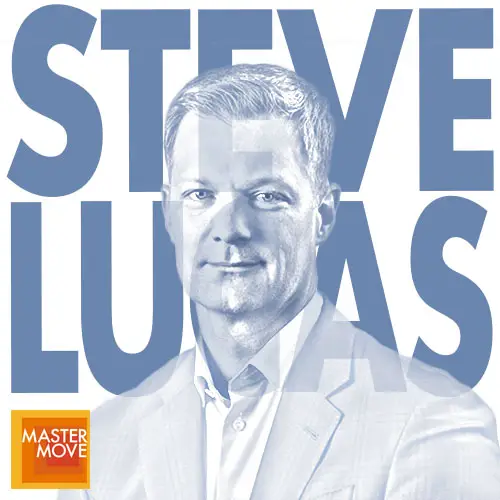
Steve Lucas is the CEO of Boomi, a global leader in intelligent integration and data automation, helping enterprises connect systems, activate data, and unlock the value of AI. Over his career, Steve has held senior leadership roles at Salesforce and SAP, and previously served as CEO of Marketo, leading high-growth teams at the center of enterprise technology innovation. He is also the author of the new book Digital Impact, which explores how leaders can navigate AI-driven transformation without losing the human element.


>> Craig Gould: Steve Lucas, thank you so much for joining me today on the podcast. Steve, you’re the CEO of Boomi, a company which helps organizations connect their systems, data, and applications so information can move reliably across the business, even as technology stacks become more complex and distributed. You’re also the author of a new book, Digital the Human Element of AI Driven Transformation, which unpacks the twin problems of digital fragmentation and data complexity, issues that have become even more urgent with the rise of artificial intelligence. there’s a lot there, a lot I want to get into. but, Steve, I’d love to start these podcasts with one common question, which is, Steve, what are your memories of your first job?
>> Steve Lucas: Well, first of all, Craig, it’s terrific to join you. Thank you for having me on, number one. I love what you do. I love the podcast that you produce, so it’s an honor to be here. So thank you very much. and first job? Well, that depends. Is it my first job when I was 14, that was bagging groceries at the Food lion in North Carolina, or first real job was working for Microsoft while I was still in college. So, what I loved about my first job at the Food lion in North Carolina, I was making $3.25 an hour. And I remember it, and I just bagged groceries. I discovered microwavable, lasagna when I 14. And, man, I loved taking my own money and going on a break and getting. I think it was like a Stouffer’s microwave lasagna today. It’s disgusting, but, and just go sit in the break room. And I was like, man, I am, I’m living like a king. But I also remember the manager of the grocery store pulling me up. She had one of those, like, raised desks that could oversee the whole grocery store. And so I walked up the little stairs and. And I remember getting my first raise, 10 cents an hour. And, at the time, I was a. That was a big deal back in the. In the 80s. And, I just remember it. It was like I realized how comical it sounds now, but it was a sense of pride moment for me that I’ll never forget. My first raise.
>> Craig Gould: Sure. Well, it didn’t matter how much that raise was. It was. It was an attaboy, right?
>> Steve Lucas: It was. And, you know, you. I. I tend to forget from time to time, and I have to remind myself constantly that, irrespective whether it’s the 10 cents an hour or, you know, an actual material raise for people, it’s the. The moments of thank you that you cannot forget as a leader. I find myself thanking people constantly now. And I really think that that is the, the role of a leader is to recognize people for not just the work that they do, but the, the passion, the commitment they bring. it is an under, I think under leveraged part of the job.
>> Craig Gould: Do you find that relationship management is a big part of your job?
>> Steve Lucas: I think it’s 100% of my job. 95. How’s that? I think managing my board is the other 5%. But you know, someone once said to me, there’s a time and you’ll know it when you have to switch from getting the trophies to giving them out.
>> Craig Gould: Wow.
>> Steve Lucas: And I never fully appreciated what that meant until it was time. And it’s being less interested in your, yourself and your own achievements and making sure that you, you first get the right athletes, but then obviously you’re recognizing them for their achievements. I’ve been giving out trophies a long time now.
>> Craig Gould: How do you find the right athletes? How do you identify those prospects?
>> Steve Lucas: I don’t think it’s through career achievements alone. I think as you know, you know, we, we can write anything we want on LinkedIn. we can craft whatever narrative we want. I find it’s, it’s in people’s passions. It’s actually what they do outside of work that interests me the most. are they either spending time with their family or exploring the world or rebuilding a car on the weekends, whatever that thing is? there’s much to be discovered, in, in in what people do with the extra time on their hands. That’s where I look. I find people that, that have those passion. Projects tend to be people that are self motivators. They discover things that need to be done versus wait around and to be told what to be done. And it’s that, you know, people, sometimes people call it grit, you know, and drive and maybe that’s it. But I, that’s where I dig.
>> Craig Gould: Tell me about boomi. You know, it sits at the center of data integration, application connectivity, now AI driven automation. But if you were to kind of strip away all that category language, how, how do you describe the real problem that BOOMI exists to solve for enterprises today?
>> Steve Lucas: It’s a great question actually. It’s the same reason I think that Google Translate exists. You know, not everybody speaks the same language. You need something that helps you interpret and connect. That’s what BUMI does. You know, every application, whether it’s Salesforce or Something from Oracle or SAP, you name it. They all speak different languages and were built at different times with different standards. It’s this very asymmetric technology world, very uneven world that we live in. And Boomi kind of fills in the potholes, the unevenness of the road. It’s Google Translate for business. It literally lets any system talk to any other system. And I, I have this firm belief that data, at rest is data wasted. Data in motion is valuable. And all too often, data sits at rest. It’s not doing anything, it’s not going anywhere. And our job is to connect all of these systems and move data. We use the word activate. We often talk about Boomi as a data activation company, whether that’s business intelligence or artificial intelligence. You need to move your data, get it in motion, activate it, get it to those systems, and at the same time make sure it’s of quality. It’s true. There’s veracity behind it. And so that’s what Boomi does is where Google Translate for the enterprise.
>> Craig Gould: Do you find that there’s a shelf life on data? I know we have to guarantee that the data is good, but can your data expire?
>> Steve Lucas: Yeah, I think data, you know, the analogy that you’ve probably heard is data is the new oil. And then someone upgraded that and said, well, data is the new solar. I think data is sand. I think there’s plenty of it all over the earth. And it’s not that it’s not valuable. We just tend to collect a lot of it. Most organizations collect it, but don’t know what to do with it. And that’s the, data in motion part that I come back to. So, yes, I find data to be lacking momentum, to be too resident and comfortable. And what we espouse and we encourage organizations to do is sweat your assets, take your data, put it in motion, get it moving between systems, get it to those business intelligence investments that you’ve made to the artificial intelligence investments that you’re making. And I firmly believe that every single. Not that we need to fast forward and talk about AI too much, but every single investment that every company is making in AI right now, will be for naught if you don’t get the data right. It, it doesn’t matter. And I know it’s easy to say, oh, you know, artificial intelligence is only, only as good as the data that you have. But, but it’s true. There is truth in this. And that’s, that’s what I, I spend my days doing, is talking to customers about getting Their data in motion, activating it for AI and feeding that beast. And then you’ll see the transformation come.
>> Craig Gould: Wasn’t long ago we were looking at the value of data in terms of how to influence our decision making. And now we’re kind of handing the keys off to autonomous solutions that are kind of working there. Right. And so it’s even more critical that we get the data piece right, otherwise we’re not going to make the right decisions. And certainly the autonomous solutions aren’t going to make the right decisions.
>> Steve Lucas: What humans do extraordinarily well is we deal with ambiguity and less than complete or accurate data really well. We pick up on cues. We know when someone, that sales rep in the room, hasn’t quite done the qualification work that they’re asserting they have. Right. That’s why the term sandbagging exists. But, but, and AI doesn’t quite pick up on that. You know, it wants to compliment us a little too much as humans. But you know, with that flaw, in mind with AI that it, it doesn’t call bs, the data does matter and we are at a unique place in the world right in time. I, I believe that we, we truly are at the most transformational moment in human history. And we don’t, we sort of sense it, but we don’t fully realize the enormity of three years ago when Chat GPT kind of came on the scene, how big the moment and the era is that we’re really in. But fundamentally it won’t matter, unless you get the data right. And organizations, every single day, dozens of times a day, I talk to people where they’re learning that very painful lesson.
>> Craig Gould: Can we kind of talk about the timeline for boomi? It existed before Steve Lucas was part of it. Right. It lived, within Dell for a while and then came out through private equity. You know, if you show up, what was it three years ago? I mean, your arrival kind of is right at that point where AI becomes kind of, something that you really have to deal with. Can you talk about BOOMI before and kind of Boomi as it has turned into, based on your arrival and the arrival of people caring about AI and wanting to throw resources at it.
>> Steve Lucas: Well, the journey, I mean, Boomi, like every other kind of technology organization, or largely was a, startup originally in the 2000s. And the vision then was connect everything. That was the mantra. And that mantra lives on, by the way. I think it made, it made sense then and I think it makes all the more sense now. You know, in the early 2000s cloud was starting to come on the scene. The mobile app revolution had not quite happened yet, but it was pretty clear that the world wasn’t going to get simpler, was going to get more complex, more apps, more databases, more APIs to connect and talk to each other. That created a good opportunity for Boomi. So Dell comes along and acquires the, the company Boomi and held it for about a decade, grew it to a very large size. And, you know, it doesn’t hurt to have someone like Michael Dell invest in your, your organization. But, in 2021, Francisco Partners and TPG, two premier private equity firms that I’ve worked with for some time, came along and said, we think Boomi needs to be unlocked. And they were right. so they, they acquired the company. And then, I got a phone call. And, that phone call sounded something like, you know, hey, we think this is a great business. We think it’s going to be amazing and transformative for customers and companies. We love the, the solving complexity, connecting systems, but it could be more. What do you think? And what I’ve done for most of my career is, I’m the person that kind of steps back and just squinty eyes, something I kind of, you know, look at it and then I’ll walk around. It’s kind of like before you buy a car, you know, you’re looking at it. Do I like that angle? And you know, maybe it needs a wrap. I don’t know, we’ll see. but, but Boomi, I looked at it and I said, you know, it’s this amazing what, what Boomi called themselves as I pass integration platform. As a service, it’s a mouthful. Basically, it means Swiss army knife for integration. Hey, you need to connect an app, a database, move data. That’s booming. Great. But it was very clear to me, as this whole AI thing was starting to happen right then, I think probably had the same when I was stepping into Boomi experience that most people listening here did when you, when you first use chat GPT and you’re like, holy cow, write a song about my kids in Star wars language. And you’re like, whoa, this is amazing, this thing. I. At that moment. And this ties into the booming strategy. I kind of felt like I was standing on a beach and the tide suddenly pulled back. And I didn’t know why, but I knew something big was coming. Not to use a tsunami, you know, metaphor necessarily, but it felt big. And I certainly, I didn’t fully understand it. If I did, I’D probably be CEO of Anthropic versus Boomi. But, you know, but, but I started to understand, what was going to happen and this is what led to the boomy strategy three years ago, which was I felt like I don’t know exactly what’s going to happen, but I know everything’s going to change. That was my mindset. I knew at that time that if AI is going to play a more prevalent role in the world that we’re in, well, one thing it needs is data unequivocally. And Bumi was very clear that the surface area of what we do, from being IPass and application integration to adding sophisticated data integration and management capabilities and API management and integration capabilities and then even AI. and we started two years ago building this AI agent that’s not a shocker today. That sounds very normal. Two years ago was abnormal, this AI agent platform. But the argument was the surface area of this technology needs to be much bigger, much bigger. And that’s going to come through build, buy and partner. And we did all of the above now. So three years later we’ve executed on not just expanding our integration platform, but also our data management stack, our API management stack and then AI and why that all fundamentally matters. Just to put a bow around this is again, AI will not work without real time, high quality data fed to it. And that, that was the vision for this. So the surface area has changed a lot.
>> Craig Gould: I think one of the things you touched on there is there are cycles, right? I mean you’ve, you, you’ve been at some, amazing organizations, SAP Salesforce, you LED market, you’ve seen these technology cycles, cloud adoption, API economies, platform consolidation, you know, what have those cycles taught you about what doesn’t change even as technology reinvents itself?
>> Steve Lucas: There is a forever problem. And that forever problem that never goes away is complexity. Never. you know, I’ve been through all of these tech cycles, as you pointed out, like many of us have, and you think, wow, well this is going to make life really simple. But the complexity that comes along with whatever that tidal wave of innovation is, whether it’s going from mainframe to client server or client server to software as a service, not quite cloud or cloud computing with hyperscalers and the mobile revolution and the app economy. And then of course, you know, you fast forward now to the probably the agent or agentic economy or the. I hate to say this word but I will, feel free to make fun of me. But the agentification of business Process, as we go through each of those, I don’t know why I had this expectation that things would get simpler, but they don’t. And that’s part of, you know, when you, when, when I sit down with CEOs and CIOs and, and I listen to what they’re trying to do. Whether it’s a, manufacturer that’s trying to reduce cost to make their product more profitable and more reliable for their customers, or they’ve got a complex technology landscape and they just, they’re kind of going crazy and they just want to simplify whatever that is. My message to them is, you know, BOOMI is here to help you compact, combat complexity. That’s our job, is connect these systems, establish a lingua franca for you to move information, as I said that data in motion, and ultimately better connect with your customers, better deliver that product or service. That’s where I always start. I don’t start with iPass and data and AI. I start with we can combat complexity. We can simplify your organization, and you can just visibly see the blood pressure kind of start to go down and de. Escalate. And I find that to be, in a good way, both a disarming and valuable place to start.
>> Craig Gould: So do you think that is a trajectory or an observation that we’ll continue to see in the future, that regardless of how we make things better with agentic AI, or improve things or automate processes, that complexity is always going to be part of the equation. I mean, folks like McKinsey and BCG, I mean, they’re cornerstones, of American business because somebody needs to help sort the complexity. Do you see that just continuing that it’s always going to be so complex. Is it just a fact?
>> Steve Lucas: Well, I’m firmly convinced that the way we work within the next 24 to 36 months, maybe a little bit longer, but I’m firmly convinced it is going to radically change because of AI. But, and I’ll get to your question because it’s really good. I think that knowing the path of the river, does not guarantee success. You have to read the, the white water as you’re going down the river, right? And, and the world will change rapidly, and things will get turbulent. But I’m firmly convinced, like, I oftentimes think about how I work with like, AI in this moment today, which is, I’m, I’m talking to AI, whether that’s Claude or, or ChatGPT or Gemini. And what it’s doing is abstracting tons of Work and complexity behind the scene. It’s connecting to lots of different data sources and websites and using its own knowledge graph and its coming up with what it believes on a probability level is kind of the right answer for what I’m seeking or in a dialogue. So I think everybody relates to, it’s like yeah, yeah, yeah, that’s, that’s how I’m working, right? And whether we say it or not, we all take the document that we’re not supposed to upload and we put it in there and we ask it what it thinks and you know, to kind of read a 52 page document and simplify it for me from time to time. Then I think okay, but, but I, I put my phone down, I’m having a conversation with AI and then I, I go to work and in at work it’s like oh my God, I gotta log into whatever application. I won’t name names because I don’t want to hurt companies feelings. But like you dread like man, I don’t even remember how to use this application, you know. And I gotta log into it to approve a hire. And I, I’m glad we made the hire. But like what is the 17 clicks to go remember to log in and approve. That’s going to go away. That’s going to go away. What’s going to happen is AI as it is aware of the Internet and public data, it will so too be aware of your enterprise, your business and your data, your contracts, your practices, your preferences, your people. And AI will help you navigate your organization. It will. I won’t log into salesforce.com and I mean no offense, they’re wonderful. I used to work there. Why would I want to go log into Salesforce and type a bunch of words about how my sales call went? Why wouldn’t I just say to you know, AI, hey I had a great meeting. Sue was there, Bob was there, we talked about this stuff. And then AI goes cool, I’m gonna clean that up because you, you, your, your grammar and spelling is terrible. And then I’m gonna put that, that clean data into Salesforce and think about what problems start to go away. One of the number one issues with Salesforce data is data quality. So it starts to go away because you put AI on the front end not, you know, fixing it after the fact. But there’s a lot that changed. But the biggest fundamental change will be AI will help us circumnavigate the enterprise. That’s going to happen.
>> Craig Gould: No, I mean that’s really interesting because I was Having a conversation just earlier today about, about transcription and about, you know, when I, when I first started podcasting seven, eight years ago, I couldn’t transcribe my podcast, and it was cost prohibitive to transcribe a podcast. But now it’s so easy to transcribe, any audio. Now you have data that you can use. And, you know, when you start talking about, as you described, you know, briefing the sales call, if that call is now happening online over something like Zoom, it’s easy enough to, to capture that transcription and then be able to utilize that in documenting. Well, this is what really happened in the call. And, you know, it doesn’t take that far, you know, of an imagination to imagine. Well, did you pick up on this, this keyword that the person said in the conversation when maybe you were, you know, checking through your notes? You didn’t really see that he was giving a cue on this or that. I had a, a CEO on the podcast who runs a, company that does localization of websites and localization of, of information for, you know, translating it to, countries around the world. And his translators, you know, Once they integrated AI, they saw an 8x productivity increase in how productive their translators could be. They didn’t, they didn’t fire a single translator, but every translator became eight times more productive. And so I think that’s the sort of thing we’re talking about in, terms of the possibilities, in terms of productivity gains. And productivity gains don’t necessarily equal lost jobs.
>> Steve Lucas: Correct? I don’t think that productivity gains equal lost jobs. I think much to be discussed and debated about where AI takes us from here, just in terms of the human element, ergo, the book that I wrote, I believe that AI should be focused on augmenting humans, not replacing humans, because we’re at this, this awkward moment where AI still has many, shortfalls. And that’s okay. It’s transformative. I already stated at the beginning of this call, it’s the most transformative thing that we’ve seen since the invention of the wheel. And that continues to be the case, maybe more so than the wheel, but, but it has many shortfalls, it does hallucinate, it does make mistakes. And that’s where us humans come in, is helping it, you know, steward along. But I think that we, we are missing this opportunity to say, hey, until we reach that magical point of AGI. And I fully do not believe, you know, Sam Altman’s hey by, I mean 2027 is, you know, check my watch less than 12 months away. We’re not reaching AGI in January of 2027. I think it will continue to be transformative, but it really should focus on how do we take humans and make them superhuman. And that’s what the book argues is there’s an opportunity to make us humans absolutely superhuman in many respects. And by the way, you or me, so Craig or Steve, from five years ago, would you even be your capability armed with AI today? Would yourself from just 5 years ago even be able to recognize the raw horsepower that you can draw upon right now? Like literally, I could be driving home from the airport and say, I’d like a 45 minute lesson, please start talking to me about nuclear physics. And I’m 45 minutes in and you know, I’m probably, I shouldn’t be messing with uranium at that point in time, but the fact that I can have that and that kind of dense conversation. And by the way, AI even knows who I am, what my skill set level is, do I have any mathematics background? Let me custom m tune it. What an extraordinary time that we live in. That I feel like me today versus even five years ago is a superhuman version of myself. But that’s where I think organizations just need to focus is how do I make each and every individual in my company superhuman? The, you know, the day when, whether it’s an AI agent replaces somebody or robot shows up or whatever, I mean, those things will happen, but they will be somewhat isolated, I think for the next probably five to 10 years.
>> Craig Gould: How do you think this is going to play out? Because every once in a while I’ll see a graphic where someone is trying to take the logo of every AI company and put it on a big board so you can see the landscape. And it’s impossible to, to differentiate any of the. Because there’s hundreds, thousands of companies, there’s bound to be consolidation at some point. I mean, how, what, what is going to drive that? Because I mean, you know, we’re old enough to remember the, the thinning of the herd, the beginning of the web world. Does it require something cataclysmic for consolidation to happen? Or is it something like you’ve been involved with where PE comes in and starts figuring out, I can pick these specific ones, put them together and now I, I’ve got something that’s, that’s more valuable as a collection than they are in their separate parts.
>> Steve Lucas: Well, is it? These are really terrific questions. as you know, with every major cycle we’ve already talked about post that cycle There is some kind of. With every boom, there’s a bust. I’m. I’m not interested in, you know, is there some type of AI bubble or. Of course there’s some kind of bubble. Anytime you hear trillions of dollars being spent in dot, dot, dot. And for you and I, like, back in the dot com days, it was billions of dollars, but same thing. So trillions of dollars being spent and fill in the blank. Of course there’s a bubble, but it’s what comes after the bubble. There was a bubble, you know, when the iPhone came out and BlackBerry said, well, this is a joke. And Steve Ballmer famously quoted as like, you know, it doesn’t even have a keyboard. This thing’s not going to be effective. And yet it’s the de facto computing device that everyone on the planet uses. Right. So it was a little bit of a swing and a miss for Steve Ballmer, I think. but it’s what comes after the bubble, right? That’s what matters. And I think often now, you know, because we forget the iPhone isn’t. It’s not even 20 years ago that it came out. Not even. Right. It was 2007. And really, like, what you and I would recognize as a modern smartphone is like, 2010, when it was like, okay, four GS out, and it’s useful and there’s a thing. So it’s been like 15 years of transformation. So what’s happened in those 15 years? Well, I, could be sitting here on this great podcast with Craig, and I could want a sandwich from. There’s a terrific sandwich place in Denver called Snarfs. Like SN A RF Snarfs. Amazing. Got this terrific turkey, and the bread is to die for. But I can sit here and say, craig, I need a sandwich from Snarfs, and I need it, like, in the next 15 minutes. And I’ll open up an app called Door Dash and which doesn’t have any affiliation with that restaurant. And then DoorDash will get my sandwich order and pass it to a stranger in a car randomly driving around the city of Denver where I live, and that stranger will get it and go, oh, well, I’m. I’m a stranger. This other stranger wants a sandwich. And I’ll drive to a restaurant that DoorDash doesn’t own, and DoorDash at the same time will get the sandwich order, and all this stuff will get orchestrated right. And if I don’t get my sandwich in 15 minutes, I’m pissed. Like, I want a refund. I’m clicking on the Help button. But what an extraordinary transformation. I’m offended if not only do I not get that sandwich in 15 minutes, if there’s something in the world that I want that is not available tomorrow morning from Amazon, I’m upset. Like, how is this possible? Why wouldn’t everyone want this thing? Right? And that’s the world that we live in today. What will come after the AI bubble? It’s, it, it’s not fully imaginable. We see glimpses and hints and promises. But I think, I genuinely believe that. I think humans will have more time on their hands. I think we will be more productive. I don’t think it’s going to. That we will lack work, but I think our, what we think of as work will be profoundly different. In a good way.
>> Craig Gould: Will we become superhuman or super soft? I, I have this vision of the travelers, on the Axiom in the movie Wall E, who are like third generation beneficiaries.
>> Steve Lucas: The little floaty thing. Yeah, they’re moving around with the drinks in their hands. Yes. Yeah.
>> Craig Gould: And so what do you think? Will we be able to utilize it to our benefit or are we just going to be such a disappointment to our grandfathers who were plowing the fields behind a mule?
>> Steve Lucas: Well, I think, if we measure our value based on, you know, how much we sweat when we labor, then, you know, every major re, you know, revolution, including the industrial revolution, the manufacturing revolution, we’d probably be disrespected by our, our ancestors. I mean, look, farmers left as, you know, farmers left the fields and went into the factory, and then the factory workers left and went into the office. you know, and the robots kind of replaced some of them there. And it’s not that we still have factory workers, we still have farmers, but we have new jobs, knowledge, working jobs. And I think that, you know, the question is, will we become superhuman? yeah, I think that we will, but I think what we’ll become is more human. I think that’s the most important thing is that we will just be fundamentally. Or we’ll have the opportunity to become more human. That’s probably. I’d love to see how you think about it, but I think we will be more meaningfully capable. When AI is used to remove friction from a system, not necessarily responsibility. I think humans will focus on judgment, creativity and synthesis. And I think machines will handle recall, simulation, execution. and maybe I’ll get burned for this one, but I don’t think it’s probably for at least a decade. I think it’s like giving a surgeon better imaging. Not necessarily robotic hands. I think better imaging means, you know, that, that they’ll do a better job with the surgery. and yeah, robotic hands help with a bit of precision, but the, the, it’s the accountability that stay humans. And I think, I think we will be weaker as a species if we turn too much over to AI and we need to figure out where that is. That’s argued in the book. I’m pointing at the book over here on my shelf. But that, that’s argued in the book that I wrote.
>> Craig Gould: No, I mean the imaging is a really interesting analogy. I used to work in financial, services and mortgage banking. And I remember having this conversation with a person who was a radiologist. And this was 20, 25 years ago, and this person was making what at the time was a really absurd amount of money, and they would basically work from home. Looking at digital imaging. In that 20 years, that job has slowly gone to people in South Asia who are also medically trained as radiologists at half the price. And now those jobs are moving from that populace to AI at a tenth. But the result for the, doctor that’s looking for finding the disease, treating the disease, the results are as good as ever, if not better.
>> Steve Lucas: Indeed. Well, and you bring up a good point, and, not to make our argument more diffuse, I want to, you know, keep it pointed, but I back on your point around AI replacing humans. Geoffrey Hinton, one of the godfathers, if not the arguable godfather of AI. Nothing. I mean, you know, I could live a thousand lifetimes and never be as smart as Jeffrey Hinton. But he said in 2016, and I’m quoting here, that people should stop training radiologists or, and you should definitely not become a radiologist. And specifically he said that it’s completely obvious that within five years, this was in 2016, deep learning will do a better job than radiologists. That was his famous quote now. And he tries to kind of qualify it a little bit more. There are more radiologists today, I think times two than what anybody predicted. There’s more people in the field of radiology, and there’s more demand and more jobs open for radiologists than ever before. So you have to sit back and go, okay, so arguably AI, which is very, very good at imaging and discovering things and reading things, how is it physically possible that if it is better at finding, ah, a cancerous lesion than a human, why are there more radiologists?
>> Craig Gould: Because we’re sicker.
>> Steve Lucas: Right, Exactly. But that’s Interesting. I can’t remember. There’s an effect that’s called there and I’ll think of it in a minute. But effectively, I think that more information, m more insight can create more opportunity. And I think AI is going to do that for some time. don’t get me wrong, if I’m a developer and AI is getting very good at writing code, I’m probably nervous, but I think that that will evolve too.
>> Craig Gould: Steve, not everyone has had the benefit of navigating a career that has taken them alongside titans like mark Benioff, Bill McDermott. Are there specific lessons that you have learned along the way? insights that you’ve garnered? I, know it’s not. It does a disservice to narrow it down to two names, but, you know, are there insights from the folks that you have been able to rise through the ranks alongside of that really you kind of cling to and, you know, hold dear? And I guess the other question is, you know, if you were evaluating yourself, self assessing, which of those leaders that you worked under do you feel like is most closely aligned to who you are today?
>> Steve Lucas: It’s been accidentally and somewhat intentionally awesome at the same time. Right. You have been extraordinarily fortunate, early in my career to get to know even people like the founder of Business Objects, which was acquired by SAP, which led me to SAP, Bernard Liauto, he’s over at Balderton Capital. Brilliant guy. So fortunate, and even earlier than that, just people in my career that they, they just really took an interest in me and took me under their wing. Now it’s a two way street, right? You have to be willing to, to sacrifice and perform and do the things that need to be done. Having worked with Mark Benioff and and Bill McDermott very, very closely. And they are titans. There are. It’s funny because I, I have a couple neurons that fire in my brain when you say Marc Benioff. The neuron that fires is, it sits really close to the, the, the word relevance and, and, and the word interesting and not, not. Mark is, Mark is relevant and interesting. But I mean, so when I was at Salesforce, I would pitch him on ideas and I heard often from him that’s not interesting. And he, and maddeningly so, would not elaborate. Now that can be very discomforting and disquieting at the same time because you’re sitting there trying to go, wow, there’s this larger than life CEO. And he just told me that’s not interesting. And that was my best idea. What I learned from that is relevance matters. And if you’re just kind of talking what you want to talk about and you’re not talking to the customer about what they want to talk about or what they’re interested in, you’re not relevant or. And relevance can be. It might be like what the customer is thinking about or what’s topical. topical could be, you know, Facebook was kind of like massively taking off at the time that I was at Salesforce when, I was running Force.com and App Exchange and all the good stuff. or at least I thought it was a good stuff. and I remember Mark thinking about, well, we need to get ah, social selling as a topic and you can instantly hear that and know what it means and why it’s relevant. Even back then. Right. or when Amazon launched, AWS and S3, their simple storage service, which today seems like the most uninteresting thing ever. Simple storage, like, who cares, right? But I remember Mark saying, hey, we’re going to get on a plane, we’re going to go up to Seattle, we’re going to meet with Jeff Bezos and team. It was the first time I ever met Jeff Bezos. And listening to Mark unpack how what AWS is doing and why, you know, document storage and unstructured document storage inside of CRM is going to be an amazing thing that we’re going to launch on stage at Dreamforce. And just being in that room and understanding what he meant when he, when he, when he would say it’s not relevant or it’s not interesting and the opposite of that and then seeing what was relevant and what was interesting, it radically altered my psyche. Like it was, it was mind altering. And then, and so I think about, and there are many positive attributes for Mark, but relevance and, and, matters and, and topical, you know, kind of interest matters. With Bill, it was different. If, just if you’ll indulge me for one more minute, Bill. Bill’s this larger than life personality. but Bill has been unapologetically himself. He doesn’t try and rewrite his narrative. He’s. He, he leans into it. He, you know, he’ll tell you, you know, he’s a kid from New York and he’ll do it with his New York accent. Right. You know, and, you know, when he was a kid, he bought a deli and, worked his butt off and he was unapologetically a salesman for Xerox. And he would tell you how, holy cow, he’s gonna sell you a copier and toner, but he’s gonna make it personal, right? He personalized things. But with Bill, you, you get this, you know, New York grit and unapologetic determination from him. and, and I remember, and I’ve shared this story a couple times, but it’s worth stating here. I remember, working for Bill. And you know, I went into his office and I mean, I loved my time at SAP. It was Bill’s like a talent magnet, right? He went into his office, big office in, Newtown Square, Pennsylvania, overlooking this field with. And it was, it was fall, I remember that. And so kind of cloudy gray in, in, in the Philly area and sitting in his office and I said, bill, I’ve been here at SAP a while, would love some feedback, chit chat, blah, blah. I said, you know, I, I want to be CEO of a software company someday, Bill. I feel like I’m, you know, here at SAP and then Salesforce and Business Objects prior to that. It’s kind of like I’m working on my go here before I go pro. but I, I was like, I told him I, like, I don’t think I fit in here at SAP. You know, I don’t, I don’t know, you know, if I, if I need to be this or I need to be that. And, and Bill said to me, steve, I’m gonna try and do my best. Bill McDermott in New York, he goes, steve, I’m gonna stop you there. That, that’s about all. That was it. And he said, you be you. That was it. And much like Mark Benioff’s, that’s not interesting. I was kind of waiting for, you know, him to wax a little bit more poetic. He did not. And so I was maybe, maybe a little disappointed with, you know, like, I, you know, I’m not sure it was epiphonic at the time, but as I, as I have contemplated for almost 20 years now, Ubu. I know what he meant. And he meant be the first rate version of yourself, not a second rate version of someone else, and lean into it, whoever you are. And I’ve been told in my career, Steve, you’re, you’re either, you’re too, too enthusiastic. You’re a bull in a china shop. You’re too bombastic. You need to settle down. You know, there’s the, there’s energy and then there’s like too much. So I’ve been told. I’ve been married 30 years. I’ve been told I’M too much. From time to time, it’s all right, but, you know, I am, life short. Be yourself. And so I know that was a very long walk around your incredibly short but excellent question. And, man, I learned some real. I mean, there’s. There’s much that I learned from them about, like, you know, strategy and big transactions and all those things, but when it comes down to it, I just remember, like, always be relevant to the audience, the person you’re talking to, and always be yourself.
>> Craig Gould: No, I. I had Kim, Scott on the podcast recently, author of Radical Candor. And we were unpacking how Steve Jobs was notorious for telling people when they brought him work, he would say, this is shit. And, you know, and what he. What. And what he meant was, you’re not shit. The work you brought me isn’t good enough. It’s not up to the standard. And it reminds me, it’s. It’s sort of his way of saying it’s not good enough to be relevant. It’s not up to the standard. That’s going to move the needle with our clients.
>> Steve Lucas: That’s right. And it’s powerful. I mean, if you. I mean, if you think about it now, and I said to any one of my employees, without giving them any other feedback, I just said, this isn’t interesting. It is in that Steve Jobs category of like, whoa, it’s impactful. It is so impactful that I remember it two decades later. I remember. And it wasn’t devastating. It was just. It was deep and impactful, and it has rested with me for decades.
>> Craig Gould: You know, I, I think we’re. We’re, getting short on time, and so I, I would just love to close with this, which is, I think it’s really obvious the, the energy that you. You manage with. How do you create, a culture that. Are you looking for a culture that shares your energy? Is it. Is it communication? Is it cadence? Is it finding the right lieutenants that share your same energy and the North Star and having them share that downstream? How do you organize, originate, manage, a, culture that is what you want it to be?
>> Steve Lucas: Well, there. There are two or three. That’s a great question. There are two or three things that matter to me in culture. Number one is I operate with a no jerks allowed policy. You know, if you’re just going to come in and be the smartest person in the room and constantly eviscerate people and you believe that that is leadership, you will not work at boomi. You won’t Work at one of my companies. Now that doesn’t mean that you can’t be direct and transparent, but there are ways, many ways to communicate with people that, you know, an idea isn’t good enough without destroying the fabric of who they are. so I, I definitely operate with a no jerks allowed policy and that includes myself. And sometimes I’m a jerk and I need to, you know, and I, I recognize that. And I have found myself many a time apologizing to a person after, you know, if, if I got too aggressive in an area. But you know, I, I try to be as self aware as humanly possible. The second is a circle the Wagons policy that I have. If someone at BUMI is sick, someone is hurt, we stop what we’re doing, we stop the wagon train and we circle around that person until they’re better. That’s just what we do. This world is, it’s moving so quickly that you do forget that human element, right? It’s the people that show up and they choose to give up their time with their families to do what you’ve asked them to do together with you. And the, the minimum amount that you can provide back is, you know, we had a co worker, won’t get into it recently, but you know, this tragic situation, diagnosed with an illness. And you know, the conversation in our executive meeting was not, what’s our forecast? you know, what does our retention look like? The latest product release, it was, how do we help this person? Is our health care even remotely good enough to cover what we believe will be overwhelming medical bills? And and those by the way, we have, you know, in a given year, there are dozens of times that I can reflect back and think about that. And the reason that I have this circle the wagons policies not because we can solve all the world’s problems. And it’s not perfect. I mean, you know, Boomi fires people. Like any other company, we hold people to high account. But I do have a circle the Wagons policy here, because I don’t want to leave somebody behind. Now that being said, to put a bow around this, I’ll tell you what I do. We have three core values that Boomi. Be bold. Be you. Be booming. Be bold. Is be out there. Be the best version of yourself. Be you is. Is exactly that. Don’t be that second rate version of somebody and be boomy is. Our DNA is constantly evolving. It’s not set. Our culture isn’t what it was yesterday because somebody new joined today and we have to graft them in, so those things matter. And last but not least, transparency matters. It is paramount to me. We have something I learned from Mark Benioff. But we. We call it a plan on a page. He calls it a V2 mom. Vision, values, methods, obstacles, metrics. My plan on the page is the one page articulation of our strategy, our vision, our values, our methods, our objectives, and our metrics. So I did borrow that credit where credit is due. But every single person at BOOMI has what we call a B pop. A BOOMI plan on a page. I do somebody in support, does a sales rep. Every single person has a B pop. And they need to be synchronized, because if they know what I’m doing and I know what they’re doing, we’re on the right page. So I don’t have the perfect answer for culture, but I know it’s. It’s a circle the wagons. I know it’s about transparency, and I definitely know, that this, that what we work on is rewarding people for. For being bold and being themselves.
>> Craig Gould: That’s really impressive. You know, Steve, I can’t thank you enough for your time today. I feel like time’s really flown. A really informative conversation. I really appreciate your transparency. I appreciate you kind, of pulling back the curtain and also weighing in on things. And I really appreciate you being my guest today.
>> Steve Lucas: Oh, Craig. I appreciate you being my host. And more importantly, I’m grateful for what you do. I think it’s a terrific podcast and there’s so much to learn. I can’t wait for the next one after mine.
>> Craig Gould: All right, wonderful. Well.