
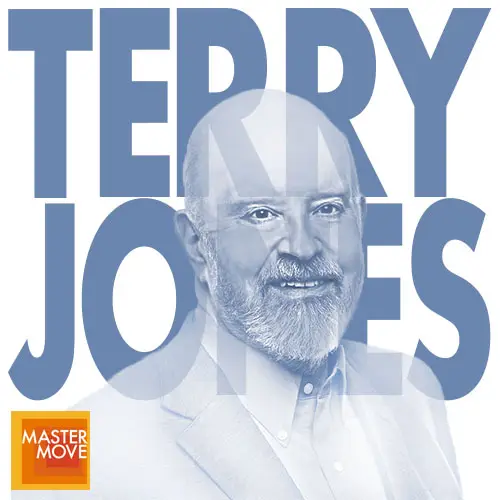
Terry Jones is a pioneering technology entrepreneur and one of the architects of online travel. He founded Travelocity, helping define how consumers book travel online, and later co-founded Kayak, which went on to be acquired for $1.8 billion. Terry has spent decades advising boards and leadership teams on innovation and digital transformation, and he is the author of Innovation On and Disruption Off, two books that explore how organizations drive change without breaking what already works.




>> Craig Gould: Terry Jones, thank you so much for joining me today on the podcast. Terry, you founded Travelocity, taking it from an internal idea to a billion dollar company, and later founded Kayak, which was later acquired for 1.8 billion. You’ve also become a sought after keynote speaker, board director and advisor, helping leaders navigate disruption, digital transformation, and the future of work. And you’re the author of two books on innovation and disruption, Off. And, Terry, I want to talk to you about a whole wide range of topics related to your incredible experience. But all of these conversations, I like to start with one common question, which is, Terry, what are your memories of your first job?
>> Terry Jones: Oh, wow. you know, my first job, my first real job was as a travel agent. I spent a year after college, I got rejected from the draft. I thought I was going to Vietnam. And, I went around the world with two guys for a year, and I came back and wanted to get into travel. So I went to travel school at night to learn in those days how to write tickets by hand, how to compute fares from a book. and this guy ran the travel agency. He listed himself as South America Travel, Caribbean Travel, Paris Travel in the yellow pages. And every agent at a different desk handled a different country, and they were all nationals of those countries. And I ended up starting as a receptionist and answered the phone, and people said, gee, your English is good. Where did you learn it? You know, because everybody else in the company had an accident, I said, well, I learned it here in Chicago. So writing tickets by hand, typing up itineraries on a typewriter, making reservations by, believe it or not, telegram some places. and now, you know, I’m chairman of an AI travel company. So a long journey from my first job to here.
>> Craig Gould: You know, it’s hard to imagine that there’s an entire generation that doesn’t know of travel booking in any way other than what you had your hands in building. Right. I mean, it’s like, you know, for a lot of this conversation, there. There are people that are 30, 35 that have no idea of what booking travel was like back, before the Internet. And actually, you had your hands in a lot of the technology that enabled that to take place long before the Internet and took off. Can you talk about before the Internet? Were you officially working for American Airlines or.
>> Terry Jones: Yes. you know, what happened was I became a travel agent, as I said, and then six months in, left with my manager to do a startup, and we built a travel company that became the 50th largest travel agency in the US and automated it. And airlines at that time were automating travel agents with the reservation systems. Another thing people, you know, don’t remember was airlines were regulated. The price from Chicago to New York was the same on every carrier. When it was deregulated, nobody could figure out the price. So airlines automated their travel companies. So I got into automation, jumped to a travel automation company that sold minicomputers to travel agents and we sold that to American Airlines. So then I was inside the Sabre division or department of American Airlines running product marketing. later went on to. My boss sent me over to run 500 developers. I didn’t know anything about that. He said, you’ll do okay. Three, years later, they moved me to run computer operations. So I ran a, computer system that not only ran Sabre, but 40 other airlines. That’s where I lost my hair, running an airline system and later became cio. So you know, I’ve been involved in travel tech for a long time.
>> Craig Gould: You know, I remember when, when I was in College in late 80s, early 90s, I interned with the World League of American Football. It was based in Las Colinas, not far from all of that. And we had an in house travel agent and so I could kind of look over their shoulders and see what they were doing. And it was green CRT screens and function keys and everything they did was on Sabre. And it’s like they fairly primitive.
>> Terry Jones: It was sort of like cobalt, right? You know, in fact, I’ll tell you, a fact your, your listeners may love. You know your, your reservation number, the five character locator. you know what that actually is? It is actually the physical disk address of your booking so that they could find it with one seek of a disk drive. And that’s, you know, that’s how much these systems were optimized. Because in those days computers were expensive and people were cheap. So you had to make it easy for the computer. That’s why people, all of a sudden you said, well, gee, I’m Craig and I have a reservation. They said, what’s your number? What’s your number? Because that was the way you had to find it to make it easy. And then today, you know, people are expensive and data storage is cheap. It’s a different world.
>> Craig Gould: When did you read the tea leaves and notice the Internet was going to be capable of changing things?
>> Terry Jones: Well, it’s an interesting story. My boss, Max Hopper, the kind of legendary CIO in American, said early on we should put Sabre onto these burgeoning networks, CompuServe, Prodigy and AOL. And we’ll make, we’ll let people make reservations, but they’ll have to get the ticket from a travel agent. So it’ll be referred to an agent. And we ran that, and I was involved in building that and running it, for about eight years. We had several hundred thousand users. But then the travel agents woke up as the Internet started and they said, you guys are selling bullets to the enemy. You’re supposed to be helping us and instead you’re starting this consumer thing that’s going to kill us. So turn off Easy Saber, as we called. And our chairman, Bob Crandall said, no, we’re not going to turn it off, but let’s hide it over in it. We’ll give it to Jones. He used to be a travel agent. Maybe we’ll put it over there and nobody will notice. And, I took it over and it was 1996, late 95, just when the Internet was deregulated. Because before that you couldn’t do business on the Internet, was a governmental entity. And I said, well, let’s put it on the Internet. So we did. and that changed everything. It grew like a weed in the spring. Eventually, we’ll talk about this maybe. But taking it public, you know, it didn’t, ha. Nobody believed that travel would end up being the largest part of E commerce. But if you think about it, it’s a natural product for that. The prices change every second. You tend not to go to the same place every time. So it’s not like buying the same thing from Amazon. You just reorder. It’s visual, you want to see pictures. there are a whole lot of reasons that travel was the right thing. But Wall street didn’t believe it in the beginning.
>> Craig Gould: Part of it probably had to do with those travel agents. Obviously it’s a relationship business. But I think consumers also felt like there was a lot of gatekeeping. They had office hours and you couldn’t browse. It was a suboptimal search for the consumer. Right.
>> Terry Jones: Well, and things had changed a lot from before deregulation. Travel agents wrote about 50% of tickets after deregulation, when they got computer systems, they wrote about 90% of it tickets because you really had to go to a neutral source to compare price. And that’s what burgeoned their business. But you know, that 40% increase, those, those 40% of people were really just listening and typing. They weren’t adding a lot of value. So when it became available for you to do that yourself. People said, you know, I don’t really need a travel agent to plan my trip to Vegas. Now Europe, different story. You know, we saw Travelocity. The higher the ticket price, the fewer bookings we got because people didn’t want to take the risk or they wanted to plan ground ups or the rest of it. But we became, the place where you can compare price. And of course, you know, even so, our look to book ratios are very high. The number of people who reserved, you know, 6, 7%. So you got, you know, 90% of the people using you as an information source. I mean, if Walmart has a back door as big as the front door and everybody is walking out with empty carts, their stock would crash. But on the Internet, ah, it’s sort of the way it is.
>> Craig Gould: What is it like creating a company like that inside of large institutions like American, like Sabre?
>> Terry Jones: Well, I, I wrote, you know, my book on, On Innovation is really about that. It’s about innovation in general. But there’s a whole section about innovation at a large company. And there’s some important lessons we learned. we moved out of the building so that we could build our own culture. people were loaning us, you know, financial people and IT people. And that, that really didn’t work. We, we had to say, you know, they have to move into our department. We have to have our own P and L. That took a while. we had to battle to disassociate ourselves with things like purchasing, which was too slow and it, which was too cumbersome, and really get our own budget, which was kind of a CIA black bag budget. Nobody knew how much money we were losing except for our boss. but everybody wanted our money and they of course, could make m return on that money today. And we were taking their money away and losing it. But in the end, you know, we went public for $1 billion. So, I think it’s up to the CEO to really protect those efforts and to, to keep them whole and to nurture them like a rose in the winter in the greenhouse. and then when it grows up, well, you can, you can absorb it, you can spin it off, you can do a lot of things with it. But so many of those efforts get killed early. because, you know, the big decision we made was, was to eliminate that travel agent referral and become a travel agent ourselves. So we were competing directly with our channel. that’s a risky move, but again, our CEO said, somebody’s going to do it. May as well be it let’s take the risk. a lot of companies didn’t do that early in the Internet. they protected their channel. Others were smart enough to say, we can enhance our channel. We’ll still use dealers because we’re selling physical products, but with a virtual product, we didn’t need to. Remember, the E ticket also had a lot to do with the death of the travel agent, because airlines didn’t need somebody in every town delivering tickets.
>> Craig Gould: You know, you described kind of being quartered off away from everybody. I mean, do you find that that was something that, I think I remember reading that you had actually once things were up and running and who. One of your businesses kind of intentionally kept different departments in different geographic locations? I mean, do.
>> Terry Jones: No, that was kayak, actually. It’s interesting, the kayak story. You know, I was working at a venture capital firm, General Catalyst Partners, and looking at various travel business and the partners, old Cutler, great guy, said, you know, we looked at a company was doing travel search and we didn’t want to buy it and because we really didn’t like several things about the model, but we said the base idea is good. So he said, look, I’ll fund this. And he went out and found Steve Haffner and Paul English, one who was CEO, one who was cto. And they, they didn’t want to move. They lived in one in Connecticut and one in Massachusetts. So we built the, engineering team in Boston and the, the rest of the business was in Connecticut. It worked just fine. And they were, they were okay to be separated. You know, those two guys were joined at the hip, but the, the teams were really separate and it worked okay. And the other thing that Paul did, which was interesting, he didn’t want to hire anybody from travel, so all his engineers didn’t know anything about travel. I took a different path at Travelocity. I fought very hard to bring people in from outside of American Airlines. So I had a mix of travel and non travel people and they fought like cats in a bag and that was good. You know, that, that created a lot of stuff. I think, I think Paul did, you know, obviously did very well with his team. I wouldn’t have gone as far as to say I don’t want anybody from travel. now on the management team, we had a bunch of travel people in Connecticut, but his engineering team, not. So, I think mixing up people, hiring people who don’t fit in, hiring people who aren’t like you, is one of the keys to creating one conflict. But two, the spark of Innovation, you know, do.
>> Craig Gould: Do you feel like you need that agitating sand in the oyster to be able to get the pearls?
>> Terry Jones: Yeah, I think you do. I mean, you sent me a question in advance about, you know, companies don’t get disrupted. They allow themselves to be disrupted. And I was thinking about that in a new way. I mean, there are a lot of things about, you know, I’m worried about the quarter. I don’t want to take any risks. I don’t do any experimentation. But think about how Lou Gerstner changed IBM. Think about how Satya Nadella changed Microsoft, you know, Ford. Same way. those were all new people. Well, satire wasn’t even new. He came from inside. But, you know, I think sometimes a leader needs to step back and say, I’m going to pretend I just got this job. I’m going to walk in like a new CEO, where you have those six months where you look under rocks and find terrible things and they aren’t your fault. and you can clean up and change. and I think that’s real healthy. Why do I have to bring in somebody new? And partly because I got to where I am by building this empire the way it is. And don’t you tell me it’s the wrong idea, get a lot of that. So the sand in the gears is, important.
>> Craig Gould: Your first book was about innovation. What are the kind of the core precepts that encourage innovation? I mean, is it an innovation mindset or.
>> Terry Jones: Well, I think this. I think the CEO has to want change and, you know, really demonstrate that they want change. They have to allow experimentation. Most importantly, they have to allow failure. And that doesn’t happen a lot. Particularly, CFOs don’t like failure. because if you don’t fail, you’re not moving ahead and you’re not experimenting. And. And then you have to say, you know, this is Craig’s project and it did great, and this is Terry’s project, and it failed. And by the way, we’re promoting Terry. Yeah, because Terry didn’t fail. The project failed. Right. And so it’s really about culture and last half full and allowing experimentation, building a culture where that happens. And it’s about building the right team, mixing up people, bringing people from the outside, as I said, hiring people who aren’t like you, getting people who want change, and who are willing to run with it and will take risk and, you know, some. And innovation can happen anywhere in the company if, if you have that kind of attitude that, you know, we’re looking to move forward. We’re looking to change. Now, you don’t want to change everywhere. I mean, look, when I ran Sabre, we were very, very careful about the changes we put in, right, because we’re running 40 airlines. But we still changed and we still evolved. But in Travelocity, when it was on the web, threw stuff up and see what stuck and call it a beta. you don’t want your pilot doing experimentation, but it’s okay to do it.
>> Craig Gould: In marketing, how do you create culture? I mean, does it start with hiring the right people or, you know, is it communication? Is it, you know, it really.
>> Terry Jones: You know, there’s a great quote from the, the CEO Panera Bread, who said to CEOs, your wake is larger than you imagine as you motor through the company, leave a big wake, mind you, consists of what you say and do. So do you support, amplify and concur, or do you criticize and play devil’s advocate? You know, what you say has everything to do with the behavior of everybody who’s looking at your wake. So tone at the top, huge difference. You know, do I want change? Because you get this thing that I call the boson layer, this impenetrable layer of middle management that stops good ideas from moving upward because they don’t want to put their head up because they’re afraid I’ll get chopped off. So if you say, you know, hey, Craig’s project failed, and we celebrate that and we celebrate Craig, it changes things. So culture has a lot to do with that. A culture. You know, when I worked at American Airlines, I mean, our chairman, you know, led. Led the first, loyalty program, Advantage. You know, invented the Saturday night stay to compete against Freddie Lakers 747s. you know, funded Sabre. I mean, it was just a place where even though he was totally focused on operational details and pennies, still allowed big innovation to happen.
>> Craig Gould: Does that necessitate flatter org charts instead of tall ones?
>> Terry Jones: I don’t know if that’s necessary. I think today what’s interesting is before, like at American, we would send memos of what we did every week that went up and up and up and up and up and eventually went to the chairman and he would right back and he was the only person who could see the whole view. Now, you know, information is available to everybody. So I, I think if you, if you just allow people, you know, like Google does, to, hey, do your own thing for so many hours a month, you can get a tremendous amount of ideas. But you have to listen. You know, there. There’s a. A famous story about a big company. I’ve forgotten their name, who decided to do, outsourced innovation. You know, crowdsourced innovation, and get ideas from all these people. Half the ideas came from their own employees. They just never listened before. Right. And. And so one of the things we did at, Frank Lloyd America, and it was an idea from ge, was we had this idea program, and you could. You could get win goods and services if your idea was approved, basically on how much revenue it created or how much it saved. But the idea was reviewed by your manager, but managers from two other departments. So you’d get around the naysayer. there’s a story about our maintenance department invented the little walk the plank thing. They put on the end of a jet bridge to attach to a regional jet, because regional jets used to have to walk outside in the rain and the snow.
>> Craig Gould: Right.
>> Terry Jones: And he submitted that. I did a maintenance, and it was rejected. The manager said, well, you know, those jet bridges are expensive, and we’re out here in the rain. Why isn’t the customer out here, too? in the new program, that idea went to marketing and finance, and they immediately approved it. So circulating ideas widely also helps. you’ve got to listen for them. You got to ask people about them, and sometimes, you know, they’re hiding in plain sight. I remember, you know, and this is 15 years ago, but when you used to go in to make a, presentation, you’d hook up your laptop, the projector, and you’d always have to put a book under it, right? It never. You never aim it to the screen. It was never right. And, you know, in those days, you put a phone book. Now there are no phone books.
>> Craig Gould: Right?
>> Terry Jones: But he’s. What happened in the corporate headquarters, didn’t that ever happen to them? Or did they have little minions who set them up and they were perfect all. Why didn’t they ever notice that? I mean, there are a lot of those things that if you don’t eat your own dog food, you don’t change.
>> Craig Gould: You know, you were talking about Bob Crandall and how he seemed to kind of lead the culture and innovation there from that same generation in the same geographic area. Herb Kelleher, was a really innovative, iconic airline leader in Southwest. But in my recollection, Southwest opted out of being on. On the Sabre system. Do I remember that right?
>> Terry Jones: Yeah, they did. But remember, they had. They had unique and different pricing, and in those days, they were cheaper than everybody else. So Herb was incredibly focused on cost. Not that Crandall wasn’t. He created a great culture of service. I mean, the Southwest flight attendants were well known for some of the best service. and he said, I’m not going to pay for that. I think people will come to us because our product is different. All the other airlines, you were matching prices within nickels. so he had a product where he could do that. And I ran his computer system at Sabre, and he had the oldest IBM mainframe under lease in the country. And I said, herb, you know, we’re going to Radio Shack to get tubes for this thing. I mean, come on. Nah, it still works now. They paid for that in the last few years. As you know, they had terrible computer problems. They had underinvested. But he, he, like Bob, was a great cultural leader of the company. It makes a huge difference. I mean, look, you know, look at the difference between Bill Gates and Ballmer and, and Balmer was not an innovator. He’s a steward. And then you get Satiah come in. And it was mostly culture. I mean, his book about how he changed Microsoft is wonderful.
>> Craig Gould: How has that played out in your own career? Being at the heads of organizations, being on boards, when you have to make a succession plan, do you look for someone just like what you’ve had? How has it played out in the organizations you’ve been in?
>> Terry Jones: I think it depends on where the company is. you know, Jay Walker, who founded Priceline later, had a, an incubator, and he said, I have starters, growers and runners, and I have people who start companies. And after a couple years, I say, you know, why don’t you come back and start a different one? I’m going to put a grower in here, and then eventually I’m going to put a runner in here. so I think they’re different people depending on stage. I mean, at Travelocity, a lot of the initial group of 12 left when we had 3,000 people because they didn’t enjoy it anymore. so I, I do think it depends on stage. Obviously, a lot of startups, you’re going to swap out the founder because the founder can’t grow. and, and I’ve been through that many times, but I’ve also been through, you know, losing a CEO to one. One unfortunately died and another left. And we really wanted a different look. You know, we wanted somebody to come in and, and relook at the company and, and find things that we missed. And it’s, it certainly happens, you know, and and you have. I. I’m running this company now. I’m not running. I’m chairman of a company, Amgen AI, which is a travel AI company. And we went through a CEO changed. I really pushed for a particular guy. And so the board said, well, you like him so much, we’ll make you chairman and you kind of own him. That’s fine. and we’re having a ball. But I really encourage this guy, said, look, you’ve been in the company a long time, but you’re. You’ve got six months where your stuff doesn’t stink. You know, you can look under every rock and blame it on that idiot before you. And you can’t miss that opportunity, to make those changes because pretty soon you own them. And you don’t want to say to the board, well, I really screwed up on this or that. but, but you, you have to, but that, that, that initial period really can push change very hard to CEOs.
>> Craig Gould: You know, at this point, do they walk into the room kind of knowing what tenure to expect? I mean, you know, it’s almost like a president walking into the White House, you know that your tenure is going to be four years.
>> Terry Jones: I mean, yeah, you got 100 days to do anything. I don’t know that that’s the case. but pressure, obviously, is intense and change accelerates. And Wall street is run by algorithms. And so it gets tough. And you can’t always totally change your business. I mean, at Travelocity, we kind of had the idea for Kayak and say, boy, what if we just did search and we weren’t a travel agency, we didn’t issue tickets, we didn’t do all that stuff. And I said, how the heck do I go to Wall street and say I’m firing 80% of my people and changing my business model to totally, that. That’s kind of hard. But that doesn’t mean you can’t create new products with new business models. I mean, there’s a wonderful story about Phillips, the lighting company who went to Schiphol Airport in Amsterdam and said, we don’t want to sell you light bulbs anymore. And they said, what do you mean? They said, we want to sell you light. We want to outsource all the light in your airport, and we’ll pay the power bill. And of course, they put in new lamps that used 80% less power and they recycled stuff and they had the data to do it, and now they have an outcome based model. so, you know, there they were able to find that you know, very workable. And there are people who sell air as a service, compressed air. So you can look at your business, look at ge who started, had enough data to sell engines by the hour. How much uptime do you want, American? 99. Here’s what it costs. 97, here’s what that costs. so I think it’s really important to look at the model and say, you know, how can we change it? Look, you know, who’s, who’s to say in, in 10 years with all these self driving cars, who’s going to be the biggest car company? You know, because you really, 90% of the day your car is parked, is it going to be gm? I doubt it. Right. It’s very hard for them to change. Although I, I did make a speech recently to a major trucking company and I asked the CEO what’s the biggest change coming, Electric trucks or self driving? He said, I think it’s self driving and we might become a trucking company. or you look at, I read an article the other day about a, ah, big VC who invested in a AI legal software company. Except it really isn’t a software company. They are a law firm. They’re an AI based law firm. They looked at contract law and said, we think we can revolutionize contract law, but we’re not going to sell the software to these traditional guys. We are going to get a team of lawyers and AI and change the business. That’s a really interesting way to go.
>> Craig Gould: I recently had a guest on a guy named Erik Becker who, runs a multifamily office called Cresset. And he’d written a book about what he called Centurion businesses. Businesses that had existed for more than a hundred years. And one of the things that seemed to be a recurring theme there was the willingness to be agile, the willingness to pivot. And it just seems like it’s something that’s easier said than done.
>> Terry Jones: Oh yeah, way easier. But look at IBM, you know, still, a powerhouse. I, I knew Ginny Rometti fairly well. I actually started an AI travel company with IBM 10 years ago. It failed. The software worked great. Nobody was ready for AI, but, you know, and, and she was an internal person, a consummate manager, really good leader of IBM, had steady growth, but it took an outside person to come in from Red Hat to really kick it over again, just as Lou Gerstner had done 25 years before. so there are those companies and you look at, you know, the big, big auto companies, I mean, and sometimes they can get Flat footed. They made a big bet on electric cars. Now the administration’s changed, e cars are out, but you have somebody, you know, like the CEO of Ford who said, look, half my business is international. I, I got to compete with BYD and these other Chinese cars. he’s probably going to make it work. Others, you know, don’t change. and then you get companies that are just like big insurance companies. M many of them are 100 years old. But actually, you know, I spoke to a company called the Hartford Steam Boiler Insurance Company. Sound like old line company, right. Started just after the Civil War. And they insure boilers from blowing up. So they do inspections and they help companies insure boilers and things like that. And I said, what’s new around here? They said, oh, we just bought an Iot company, and we’re getting into Internet security. I went whoa. And, but if you think about it, you know, their business is inspection and quality and so they can expect for cyber security. They can help people put Internet of things devices in their product line, but make sure they’re going to work well and insure against it. So they’re going to be a 200 year old company because they’re playing to the strengths of what they do, which is, you know, inspection, helping companies and helping them manage their infrastructure. That matters, not a boiler.
>> Craig Gould: Your background is really aligned with a guest I had on previously, Erik Blatchford, who was, oh sure, you know, good friend. Yeah. One of the places where you guys kind of align is, you know, he eventually spent time at tcv. You spent time at General Catalyst. Can, can you talk about that experience being on the, the other side of the transaction and evaluating companies and what, what do you look for? What, what, what is that like?
>> Terry Jones: I, I think you know, what’s, what’s people forget sometimes is the team is absolutely as important as the idea because the idea will never end up being what it is today. You know, you were always going to pivot to some point. You’re always going to change. I mean I was on a call just before this with a company I help. I got them back into a VC and they said, well we kind of looked at this before and I said no, this is X Company 2, the return because they figured out a way better made to make money out of their model. and they have the smart guys who are smart enough to do it. So you know, that’s, that’s why you have entrepreneurs in residents at VCs who, who’ve been there. That’s why they want somebody maybe who failed before, because they know what not to do. and it’s, it’s really about placing the bet on, the management team and the idea. You know what’s fascinating today, I mean, you mentioned family offices. You see, you know, when Travelocity started took many, many millions just for the infrastructure and for the customer service. When Kayaks and we had 3,000 people or something like that. When Kayak went public we had 200 people. We actually were doing our books on QuickBooks and Morgan Stanley said, well, we can’t take you out with that. So we bought Oracle Financials. I don’t think we ever used it, but we said we had Oracle Financial Services. And you know, and now it’s two guys in an AI, who start with their credit cards but they don’t go to VCs because VCs are too big. And they, they say they do startups but they want you to have a million in ARR. So you go to a family office, and that’s become the bridge. So, I wondered from your question, but I think the important part is it’s, it’s as much about, about people. You know, nobody believes the hockey stick graph on the last page that says you’re going to make a billion dollars. It’s you know, are you going to get to a million dollars of ARR? And how fast and how nimble are these people?
>> Craig Gould: I remember my first startup in Silicon Valley. My partner and I were going through the pitches with the VCs and it’s just, you know, it plays out the same way from, you know, from pitch to pitch to pitch, you know. And you know, you can always anticipate similar questions, but you know, every time someone had a little bit different feedback. And I remember this one VC who was especially nice for a VC because you know, the m majority of them can kind of tend towards the Simon Cowell sort of reaction, right? But he said, he took us to the side and said, you know, look, this isn’t a fit for us. This isn’t anything we’re going to be interested in. But you’re having these meetings over and over again. If you just listen to how people are responding and listen to what the feedback is, your plan, if you’re adaptable, is going to change and you can come back to me in six months with what I’m sure is going to be something totally different.
>> Terry Jones: Oh yeah, that happens all the time. And in fact, I always encourage people and I’ve Mentor. You know, I’ve been on 20 boards, but I’ve mentored a lot more companies than that. Go make your first pitches to people who think, you think will turn you down. You know, like this guy who, you know, he’s not. I don’t do tech, but I’m willing to listen because it’s like opening a play, you know, in Baltimore instead of on Broadway. why do they start in Boston? Well, it’s not a bigger risk, but.
>> Craig Gould: Boston will tell you exactly what they think about your. Your work, right?
>> Terry Jones: Oh, yeah, they will. You know. Wicked pisser. Yeah. so, you know, that’s what you need to do. And listen to the feedback because the business may be fine, but your explanation of it may suck. and. And, you know, again, I did this one 30 minutes ago, and. And the VC asked a very fair question about, okay, I. I see you have three lines of business, but how do they really interact and how’s that revenue going to play out? And we didn’t have that graph. and that’s great feedback. We should have had that graph because it’s a complex business. So you take that feedback and you change it for the next time, and you got to kiss a lot of frogs and find a prince. And, you know, eventually, hopefully you will. but it’s tough and difficult and, you know, being, you know, you ask our, you know, entrepreneurs. Salespeople. Yes. They are constantly selling. They’re selling their idea. They’re. They’re trying to raise money. They’re selling their customers. You got to be a salesperson if you’re going to be a CEO. I mean, you, you know, are you comfortable with risk? Yeah, you got to be comfortable with risk. Can’t like it necessarily. You know, are you that big idea person? Not always. You know, you may work with a big idea person, but you can sell the idea.
>> Craig Gould: Tell me about disruptions, basically what I’m talking about.
>> Terry Jones: And I do this in my speeches. If I give an hour Talk, the first 30 minutes will be about AI and drones and 3D printing and AI visualization and all the changes that are happening just to kind of scare the crap out of the audience, get them out of their chairs, and then always use examples from other industries, not theirs, because I’m not credible necessarily in their industry. But. And then turn around and say, okay, you know, what are you going to do about it? And. And then it’s about, you know, do you. Do you start a, a skunk works. You know, what kind of team do you have to have to change. How open are you to change? How do you make decisions? One of the, I wish I could show it. One of the movies I have in my speech is a pinball machine. And, and it shows an idea being launched out there. And manufacturing says, oh, we can never build that. And maintenance says, don’t worry, we couldn’t fix it. And, you know, if you get through them, then marketing says, well, we couldn’t sell it, right? And then you get to the big guns down at the bottom, those two little flippers at the bottom of a pinball machine, and that’s finance and legal. And they just say, no, it’s never happened. And that’s what happens to an idea in a big company. So you have to get people in the mindset of, of saying yes. And, you know, our job is to get a new idea over the finish line, not to go back to my office and do emails. and, you know, that’s, and, and listen, you know, I was with the, the president of American Express, at a dinner in Silicon Valley and he was out looking at startups, did it every six months. And he said, look, MX started as a Railway Express, right? We were American Express. We’re a cargo company. He said, you know, now we’re a financial powerhouse. He said, I don’t know what will be in the next 50 years, but it’s not going to be this. So he’s out looking and listening and seeing who’s shaking up the business. You got to do that. And you can either buy a startup or copy a startup. but, but you just, you’re going to get disrupted. If you stay the same, there’ll be a nice historical marker, said this, you know, this is where the Jones company was. They employed a lot of people in town until they forgot what business they were in. and so the book disruption off goes through a lot of the disruptions, but then the various things you can do to really get around that disruption. And as we said before, you know, looking at your business model may be all you have to do. You know, it’s going to change what.
>> Craig Gould: On the horizon excites you. I mean, you know, everybody’s talking about AI. What are you seeing that’s exciting you? How, how are industries changing?
>> Terry Jones: Well, I think what we’ve seen up to now is AI as personal productivity. So people are using it as a force multiplier in their own jobs. We see a changing marketing, we see a changing programming and engineering, we see a change in customer service. And that’s all great. And I’M doing that in the AI, company where we are. We’re helping travel agents be much more productive, make reservations more quickly, change, improve customer service. That’s great. but I think one of the things that’s important to remember is that AI are learning systems. They get better over time. So if your competitor has a product that is learning and improving and yours is not, how you ever going to catch up? I mean, I think one of the reasons that the Tesla has such, such high customer loyalty, and I have one, is that the car actually improves over time. I get software updates that make my car better and I don’t even have to pay for that. So if you think about embedded AI, in products, I think is incredibly important. I mean, you look at John Deere, the tractor is no longer a tractor, it’s a platform. Right. And they embedded a weather company and they’ve embedded, know, lasers to kill weeds and they understand your farm and where you need more water and different kind of seed and less fertilizer. And now it’s learned my farm, that data is owned by John Deere. So am I going to go to a Massie Ferguson? No, because it doesn’t know my farm. So I, I’ll give you another example. My dog wears a GPS collar because he roams. It’s been fine, works good. And then a couple years ago, they started telling me how much my dog was sleeping and eating, scratching, sleeping and drinking. I thought, yeah, well, sort of interesting. But now they came and said, you know, Winston is not, is off his food and he’s not drinking and he’s sleeping more. Would you like to talk to a vet? Press this button for a zoom call. So the collar has now become legion for the vet. When V was a vet, I’d give those collars away. you know, just like an Apple watch can diagnose problems. So they’ve embedded AI into their product, took the base product is the same, but now it’s much more valuable. So that’s what excites me is, you know, AI as the new ui is great. Natural language is going to revolutionize travel interface. You, a huge number of people are starting their travel search with GPT or M Plexity. that’s all, that’s all good. I think you’ll see the online travel companies become much more about route planning and total trip planning because now you can ask harder questions and get better answers. But I think Tom Friedman wrote a column recently about being in China and they’re abetting AI in everything in refrigerators and who knows? Okay, I have WI fi in my dishwasher, but I don’t really know what.
>> Craig Gould: To do with it.
>> Terry Jones: you know, but a smarter dishwasher that cleaned better or understood how to save water, makes a tremendous amount of sense. So I think what excites me are how you rebuild a process with AI, and use it all the way through your manufacturing line. And you have visual systems that were, you know, that do quality. and, and you know, know, we’re, we’re. I, I was in China and, and this guy said, well, we’re going to have the first lights out factory. I went, wow, that’s great. But you got a billion people here, you know, so we’re going to go through rather dramatic change. We did that before we went from the farm to the manufacturing facilities. tremendous change. Between 1850 and 1920, we’re going to see that kind of change again. But you know, even with the Internet, everybody said, oh, we’re going to lose all these jobs. We did lose jobs, but we got new jobs.
>> Craig Gould: No, it’s, it’s interesting. I had several AI CEOs on the podcast for Conversations. And, and one of the things that is, is really obvious in, in talking to them is that there’s this flywheel aspect to those companies, that kind of tracks with what you said in terms of the earlier they figure out what their product market fit is and the quicker those companies start growing, the more and more data they wind up acquiring. And the more data they acquire, the better the AI becomes. And the better the AI becomes, the more data and it just kind of. Oh yeah, and whoever that first leader is has a moat that is really difficult to get past.
>> Terry Jones: Well, I think, you know, I heard something when I was working with Watson. This guy said he thought that the most impactful AI solutions would combine public data with industry data and corporate data to create new products that hadn’t been created before. So I worked with a healthcare company, for example, and they took weather data, pollen data, patient appointment data, insurance data, and put them all together. So that was those three layers of the cake. When a big pollen event was happening in Dallas, they were able to email people in advance who they knew had bad allergies. They sent out inhalers to people, they sent Uber to people who didn’t have insurance. So to bring them into the hospital rather than spending all the money on ambulance. And then, what did the system learn how to get better? IBM had a great product called, Chef Watson where they combined Every ingredient in the world in a taste database, along with every recipe they could find, and they told it to go create new food. And some of it was terrible, but a lot of the chefs said some was great. And the chef said, I never would have thought about combining those ingredients together, you know, so, so AI can be pretty creative given the right data set. So what new? Look at, look at Tesla selling car insurance. Well, why are they good at it? Because they have all the sensors in the cars, right? They, they can predict better than others, and they have 12 billion miles of driving data, right? So, yeah, data. Data is the new oil and AI is the new refinery. But I think what’s important for corporations to understand is what is the data that we have that OpenAI doesn’t have, that we can combine with data to make it better? In our AI reservation systems, they save a lot of time. But it’s really when we started mining people’s past reservations that we started making offers that were much closer to what they wanted. Because people fill out a profile saying, I like American. And then they forget they have that profile, and it keeps talking about American, and nobody looks back to say, oh, he changed the delta. Right? So by mining that data, we can create a better personalization system.
>> Craig Gould: Terry, I really appreciate your time today. If people wanted to, keep track of you, your books, your public speaking, if they want to reach out, where’s the best direction to send them?
>> Terry Jones: Terryjones.com there are tons of videos there. You can watch, you know, what I talk about and, and there are lots of podcasts there. you can buy a book there and you can reach out and contact me. And I’m, I’m happy to hear from people, you know, at this stage of my life. Mostly I’m giving back, you know, mentoring and, and helping companies that I find interesting, most of them in travel. But I’m on two cyber security boards. I know a bunch about that. And, you know, I’ve served on boards of all kinds of companies. So happy for people to look. And the books are on innovation and disruption off. They’re, they’re very quick reads. They’re like 75 page chapters. So, it’s real quick to go through it, sort of like a cookbook. And hopefully you’ll get some ideas.
>> Craig Gould: Well, again, I, I really appreciate your time today, Terry, and thanks for being my guest.
>> Terry Jones: Thanks for having me.
>> Craig Gould: All right.